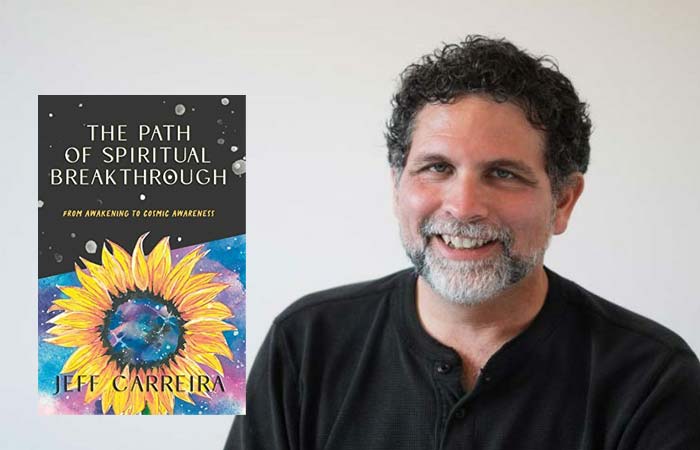
Jeff Carreira: Can you start by speaking a little bit about yoga nidra and how you started with the practice and why you’ve become so committed to it?
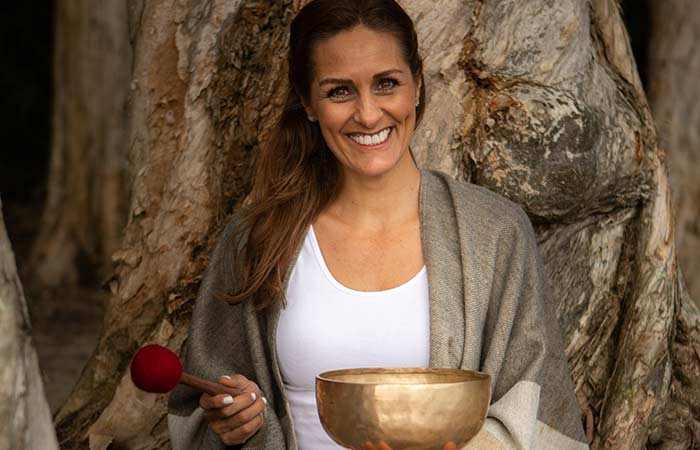
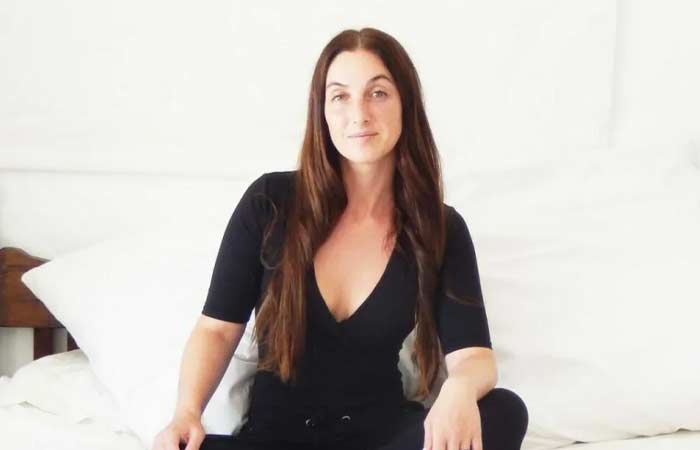
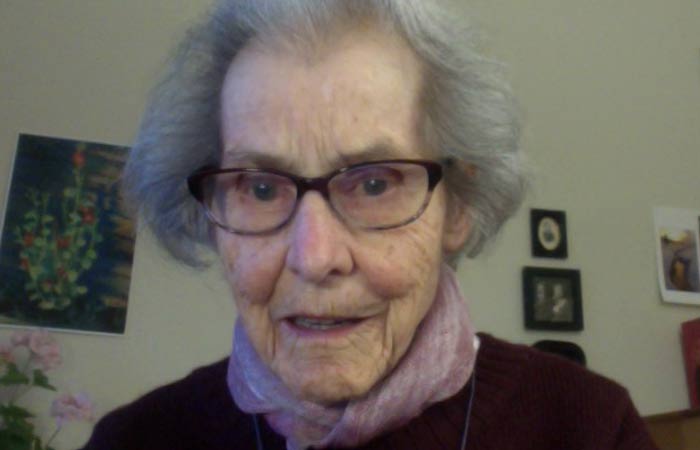
Rosalie e’Silva: I've been practicing yoga nidra for about 18 years, and I discovered it at a time when I was very afraid of speaking in front of groups of people. It was something that was really holding me back on a professional and personal level. I lived in Bangkok at the time, and I just happened to stumble across this thing called Yoga Nidra.
I was drawn into the practice and discovered the idea of having a sankalpa, which you can think of as a heartfelt intention, but for me it's even more than that; it's an orienting principle for your life. I created a sankalpa, “I speak with confidence and clarity” and worked with it for about 18 months. The change I saw in myself was immense.
It was incredible to witness how much inner transformation occurred through using the sankalpa and practicing yoga nidra every day. After 18 months, I saw myself standing in front of people and truly speaking with confidence and clarity. That’s when I realized how incredibly powerful this practice is. It can have deeply transformative effects.
There are many benefits of yoga nidra. It helps reduce stress, anxiety, improves sleep, and so much more. There are also studies happening now that show that it positively affects PTSD.
It helped me overcome my fear of public speaking and it's only because of that that I was able to fulfill my dream of becoming a broadcast journalist. That would never have been possible without yoga nidra.
Jeff Carreira: That's wonderful because I'm enthralled by the idea of sankalpa and I’d love you to say a little about how you work with one.
Rosalie e’Silva: You always begin and end yoga nidra with a sankalpa. This is a short positive statement that encapsulates a deep inner longing. It's a deep heartfelt desire within you. Your sankalpa evolves over time. It has a lot of power in yoga nidra because, especially at the end of the practice, you're planting a seed of intention in your subconscious mind. It's so powerful. So yes, you use it within the practice, but also outside of it. There's a great book called Radiant Rest by Tracee Stanley that speaks to how to incorporate your sankalpa in daily life. You allow yourself to feel the essence of it. You incorporate it as much as possible in your life. The longer you stay with it, the more powerful it becomes.
Students often ask me if they can have more than one sankalpa. Generally, there's a primary sankalpa and then secondary ones that support it. I'm talking now about the primary sankalpa. You can have more than one primary, but only one at a time. You pour all your energy into that one and once it happens, you might move on to the next one. My sankalpa is part of something much bigger now. It has expanded and evolved, and it incorporates speaking with confidence and clarity, but it is much bigger than that now.
Jeff Carreira: When you work with yoga nidra do you recommend practicing daily?
Rosalie e’Silva: A hundred percent. You need to show up for yourself. I think the best gift you can give yourself is carving out this time to really connect. It's like returning home to your true self everyday. I practice every morning for 10 to 15 minutes instead of a morning meditation practice. I started doing that during my last teacher training with Ally Boothroyd; a part of my training was establishing a daily practice. And if I have enough time, I meditate after yoga nidra and I find that my meditation practice is much deeper. But consistency is key to get the full benefits.
Jeff Carreira: The YouTube videos that I have used of yours are generally an hour to two hours. Why so much longer?
Rosalie e’Silva: The longer practices I offer have a different intention. They are designed to support you to reach much deeper aspects of yourself and ultimately to astral project. They are best done at night as you fall to sleep or in the middle of the night if you’re practicing the “wake-back-to-bed” method.
Jeff Carreira: The first time I used one of your guided yoga nidra videos I was immediately propelled out of my body, and I’ve experienced that consistently with your yoga nidra guidance. Could you tell us a little about your interest in astral projection?
Rosalie e’Silva: Yoga nidra and astral travel have always been connected for me. As a child I was afraid of the dark because I always had weird experiences at night. I would hear voices and see people coming into my bedroom and so I didn't want to fall asleep. To stop myself from falling asleep, I started being able to imagine being able to think from my left big toe and then I would think through different parts of my body. Without realizing it I was practicing my own form of yoga nidra from a very young age. I was training myself to let my body sleep while keeping my mind awake and that is the state needed to induce out-of-body experiences. It’s called the mind-awake-body-asleep state.
Then I started to experience quite violent vibrations in that state. It was traumatic because I had seen the film The Exorcist and I really thought I was being possessed. My body would shake uncontrollably. I now know this is the vibrational state and a very common precursor to astral projection. But at the time, I was terrified of falling asleep. Then when I was around 19, a yoga teacher explained to me that what I was experiencing sounded like the onset of an out-of-body experience. He suggested I read Robert Monroe's first book, Journeys Out of the Body. That book changed my life because it explained in detail what I had been experiencing since I was a child. It shifted everything because I realized that those vibrations were a common experience prior to out-of-body experiences that acted like an energetic gateway. I realized that I was resisting the experience and as soon as I let go and surrendered to it, everything changed. I had the most incredible experiences. Later I trained in astral projection at the Monroe Institute in Virginia and with Todd Acamesis in London.
For me, astral projection and yoga nidra are so connected because yoga nidra naturally brings you to the mind-awake-body-asleep state where you can have an out-of-body experience. But of course even if you don’t astral project, you still gain all the benefits of yoga nidra. And that practice in itself is so powerful.
Jeff Carreira: You started this conversation stating that yoga nidra has many benefits, increased relaxation and self-confidence, and much more. Almost anything can be supported by yoga nidra because through the practice we engage with the formative layers of the subconscious mind and plant seeds of transformational intention. You are also saying that yoga nidra can act as a doorway to spiritual awakening and spiritual growth. Can you talk about these two levels of benefit? And more specifically I want to ask you about the spiritual benefit of astral travel, why would someone be interested in pursuing that?
Rosalie e’Silva: Because once you know that you are more than your body, everything changes. Your whole perspective of life changes. When you truly know that everything you can see and touch is not all there is, you see all that as the surface of reality. For me, astral projection is about returning home to your true essence and experiencing how truly unlimited and powerful you are. For me, It fast tracks your spiritual and personal evolution when you really experience your inner light because you see yourself as you truly are. I don't think there's anything more beneficial than that. You lose your fear of death. You have access to guidance from higher sources. You can even learn to reconnect with people who've crossed over. I've done this on several occasions, but it's difficult to do because in those realms you have to keep your emotions in check. If you get too excited or too emotional, you will bring yourself right back to your physical body. For me, yoga nidra and astral projection are gateways to personal transformation, to really knowing and experiencing your true, unlimited self.
Jeff Carreira: That's beautiful. And what you just said about keeping your emotions in check, I realized the same thing about lucid dreaming, and later in meditation too, and now I see it applies equally in yoga nidra. In terms of lucid dreaming, if you wake up in a dream it's natural to get excited about it, but if you get too excited about it you find yourself back in bed. The same thing is true in meditation. If I'm on a retreat and can sit and let go deeply enough, my body falls asleep in the chair. It's like lucid dreaming, which I now realize is like yoga nidra sitting up. When did you put together that astral travel and yoga nidra work so well together?
Rosalie e’Silva: Very early on, when I started to learn what yoga nidra was, I saw that it was exactly what I did when I worked with astral travel at the Monroe Institute where I was taught how to move into the mind-awake- body-asleep state. As soon as I started to practice yoga nidra, I realized the similarities. I’ve been teaching yoga nidra for many years, but I only started teaching publicly about out-of-body experiences a couple of years ago. Before that it was a hidden part of me, something I only shared with my close inner circle because I know it sounds a bit crazy.
Jeff Carreira: How does it feel now to be speaking about it publicly now?
Rosalie e’Silva: It feels amazing. It feels like I'm actually allowing myself to step into my full power and really express all parts of myself. I think that's really what my sankalpa of speaking with confidence and clarity was all about. It's about sharing the truth behind the words, being able to speak my truth. This has been such a big part of my life that it feels amazing to be able to talk about it and share it because I truly think it is one of the most powerful practices of my own spiritual evolution and the experience of sharing it with others is absolutely amazing.
Interviews

Artificial Intelligence and the Evolution of Consciousness
Interview with Steve McIntosh
Presence Cannot Be Simulated
Interview with Charles Eisenstein
Beyond the Creative Glass Ceiling
Interview with E. J. Gold and Claude Needham
“I Feel Responsible”: The Challenges of Bringing AI to Ethiopia
Interview with Mekdes Asefa
AI and the Future of Our Classrooms
Interview with Amy EdelsteinBook Reviews

A Summary of the Fetzer Institute’s Sharing Spiritual Heritage Report: A review by Ariela Cohen and Robin Beck
By Ariela Cohen

Choosing Earth, Choosing Us: Book Review of Choosing Earth
By Robin Beck

Everything, Everywhere, All at Once: Movie Review
By Jeff Sullivan
Monk and Robot: Book Review of A Psalm for the Wild-Built
By Robin Beck