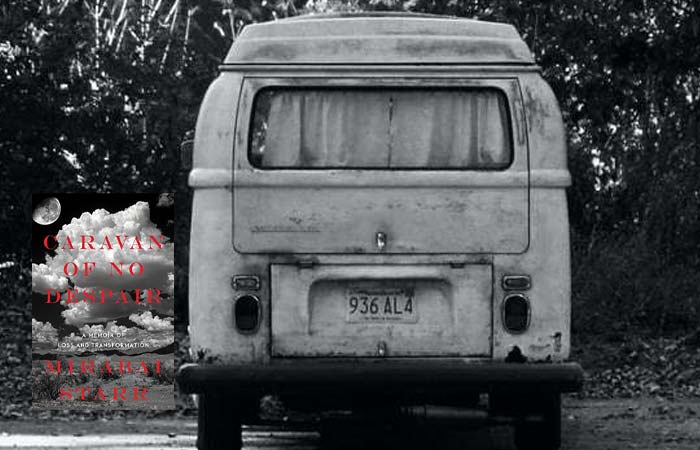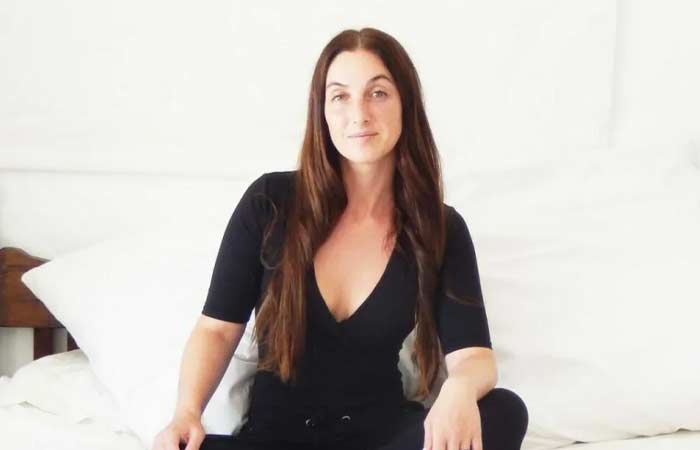

I don’t read many memoirs. And I don’t usually like reading about grief unless I have to, which is often, as I deepen my understanding of trauma and the neuroscience of racism for my programs in transformative secondary education. So reading this book out of the blue one sunny weekend was a little out of the ordinary for me. I had seen Mirabai speak about working on Caravan when I first met her at an interspiritual conference some years before. We were at a Franciscan retreat center in the beautiful Southwestern desert. She spoke about the loss of her teenage daughter and what that had done to her heart, and described her process of navigating that wide-open wound in her writing. She seemed so small when she spoke, so fragile and alone, and so solid and strong in that very vulnerability and aloneness. The way she held herself was both moving and confronting. She was so honest, so unapologetic, and so immediate. When I opened up her book some years later, I never expected I would read Caravan in virtually one sitting, driven to stay with her, as though I could not leave her side, bearing witness and holding her proverbial hand as I held her book, pausing only when I had to eat, sleep, and complete a few other necessary tasks and obligations.
Mirabai’s writing is deceptively smooth and easy. She’s a gifted storyteller, one who has read the greats and worked to master her craft. I appreciated the cadence and rhythm of the prose itself. What really drew me though was her courage as she recounted her life story; from the recent loss of her teenage daughter in a car accident that had quite a backstory, through the illness and death of her younger brother in her own childhood, to her painful coming of age under a not very awakened or scrupulous spiritual teacher. She laid her soul bare, without asking for a promise of relief or resolution, or even a gentle assurance of understanding. She dove right into the deep waters and stayed there, demonstrating that her way through is with.
In an unspoken way from start to finish, this book wrestles with the question: What does it means to love God and live with grief? How can we be broken in a world that was created out of perfection and that exists—all its imperfections notwithstanding—in perfection?
The groundwater of Starr’s book evokes the life and evolutionary theology of Teilhard de Chardin. In the dark evenings, as Teilhard lay in his stretcher-bearers’ medic tent with WWI carnage all around him, he felt into a grand unity of all things. Out of immense suffering, he intuited what he called the Omega Point: ever higher forms of Love and harmony, pulling us up and into a more perfect intimacy with God, even as this moment now is already completely perfect and full. Everything, wholeness and brokenness, exists equally and always within a divine milieu, within life’s sacred container. Teilhard articulated a paradox between the immediacy of an ever-present wholeness and one that is always in a process of becoming, always reaching towards higher forms of integration. This process exists as the process of life or the unfolding of Spirit, one inseparable from loss, tragedy, and despair. Teilhard found his way, inspired or repelled or both by the devastation of battle and the sensory reality of immeasurable suffering. Mirabai wrestles with questions as large.
But her story is not one of battlefields. It is the grief of a mother’s heart, a woman’s soul, and a girl’s body that is battered, even shattered, by life lived at the edges of social norms. It is a window into the hippie lifestyle of her non-conformist parents, the less than perfect social experiments of the Lama Foundation community, and the unseen scars and mental imbalance that shadowed her adopted daughter’s meteoric spirit, which lit the sky in its diamantine brilliance, and disappeared into the void all too soon. Mirabai, somewhat different than Teilhard, does not offer a grand synthesis where we can rest and find resolution. She does not leave the grief of her heart on one plane of existence, while dissolving into another. In her unmitigated confrontation with loss in its various forms and dimensions, she exists with grief. For Mirabai, that very surrender to the pain of life as it is, unmediated, is her path, her answer to a question we all must wrestle with as we endeavor to make our lives, in this sometimes unbearably painful world, meaningful, real, and true.
Caravan is not a “how to” book to help readers deal with their own grief. It does not describe a method or a practice that can be imitated or followed. It would never attempt to tell another soul how to navigate its own confrontations with inexplicable and seemingly unbearable pain and continue to love Spirit and live. And yet, in this one woman’s courageous truth-telling and witness-bearing to the wounds of her own life, Mirabai opens up many doors and possibilities for readers to come to terms with their own experiences of loss, directly, without artifice. Whether you feel your life has been shaped by great loss or not, Mirabai’s willingness to walk in the darkness of the unknown provides direction to depth. Hers is a wabi-sabi story, where the crack itself is what makes the artform all the more beautiful, where the frayed and torn strands of our hearts can knit in a new tapestry. Without a path or a promise, Caravan of No Despair lets us experience how, in radical acceptance of the many shapes of reality, we may find a very different way to live with grief. In that lack of resistance to what is may come our own wisdom and even our own rebirth.
Interviews

Artificial Intelligence and the Evolution of Consciousness
Interview with Steve McIntosh
Presence Cannot Be Simulated
Interview with Charles Eisenstein
Beyond the Creative Glass Ceiling
Interview with E. J. Gold and Claude Needham
“I Feel Responsible”: The Challenges of Bringing AI to Ethiopia
Interview with Mekdes Asefa
AI and the Future of Our Classrooms
Interview with Amy EdelsteinBook Reviews

A Summary of the Fetzer Institute’s Sharing Spiritual Heritage Report: A review by Ariela Cohen and Robin Beck
By Ariela Cohen

Choosing Earth, Choosing Us: Book Review of Choosing Earth
By Robin Beck
Everything, Everywhere, All at Once: Movie Review
By Jeff Sullivan
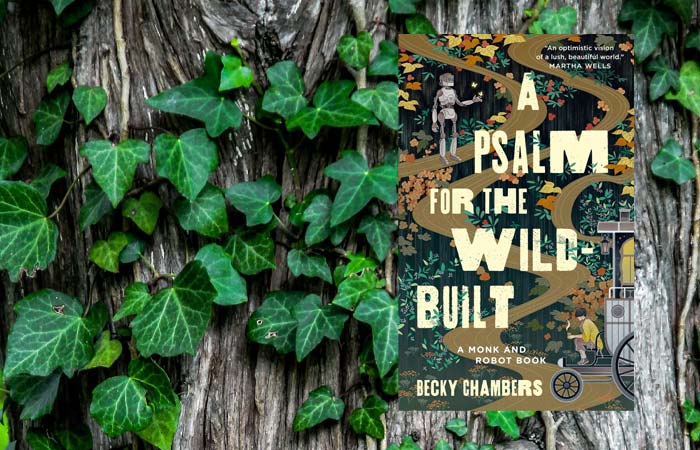
Monk and Robot: Book Review of A Psalm for the Wild-Built
By Robin Beck