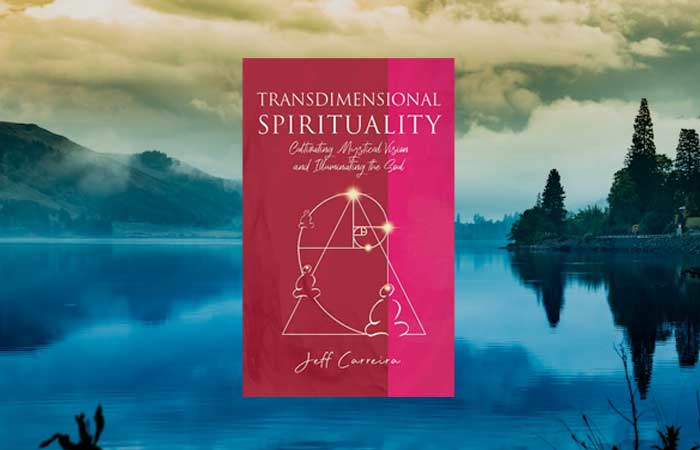
Jeff Carreira: I've been reading your book, The Alchemy of Your Dreams, and have been looking forward to speaking with you about the work that you do and your experience of how spiritual awakening can be facilitated in sleep and dreams. My initiation to the spiritual path in the late '80s was through lucid dreaming. At that time, I was reading Stephen Laberge and Carlos Castineda. I was consistently awakening in dreams and exploring the possibilities I read about in books. After a few years I got involved with meditation and left lucid dreaming behind. I was always fascinated by lucid dreaming and my experiences in that domain have always been part of what I teach, but a few months ago I took a yoga nidra teacher training that reawakened my interest. I saw how my early lucid dreaming work never really ended. It just moved into a different domain and informed my meditation practice in ways that I wasn't always aware of. For me lucid dreaming was always about spiritual awakening, and what excites me about your work is that you seem to feel the same way. In your book's introduction I was captivated when you wrote, “When you dream, you are guided by something much larger than just your own mind. You are led by spirit in tandem with your own psyche.” Can you tell me more about that sentence and what you mean by that, any other point of view, and what brought you to it?
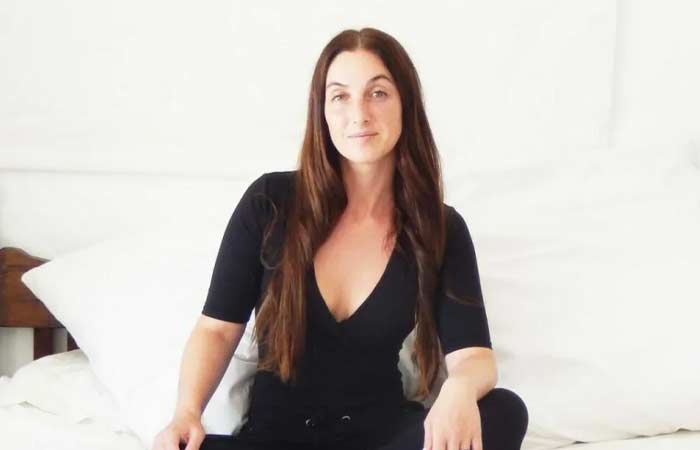
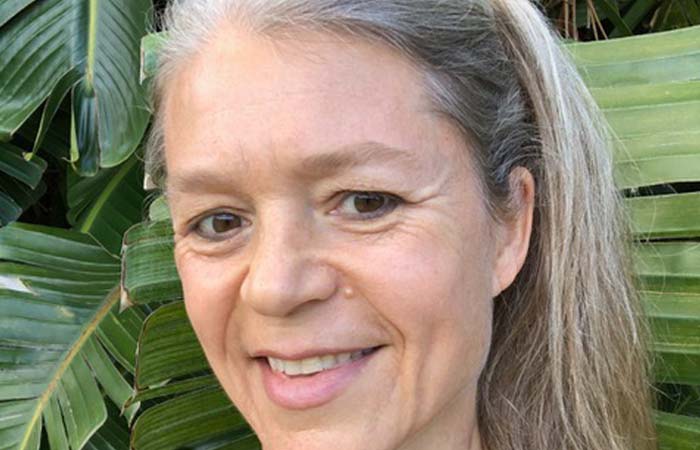
Athena Laz: Of course. First, let me say that your story sounds very interesting. I always felt that meditation and lucid dreaming were two pathways to the same thing. I feel that they can really support one another. In relation to that sentence you read, it was funny because that sentence hit me after the book was finished. I had always felt that I wanted to write a final chapter about how dreaming brings greater awareness to the illusory nature of reality and maybe elaborate more on dream yoga, but I was uncertain because I thought I would be writing for beginners. So I wrote about symbolic dream work first, then about lucid dream work, and before I had written about dream yoga I woke up one morning with that sentence in my head. I knew that sentence would speak to the right people and so I rewrote the introduction and didn’t feel the need for the extra chapter.
In terms of how I got into dream work, when I was young I would have lucid dreams all the time, although I didn't know what they were. I was seven or eight, maybe even six years old, and I'd often go into the in-between stages of sleep. My parents wanted me to go to sleep at a specific time so I learned to force myself to fall asleep and without realizing it I was training myself to enter the liminal space between wakefulness, sleep and dreaming. Unfortunately, I often saw things that were quite frightening, and so I shut it all down. Later I decided to pursue a career in psychology and I was training as a psychologist while at the same time working in an esoteric store called The House of ISIS. Eventually I worked in trauma therapy for a very long time in private practice. In 2016 I realized that I knew I needed to do this deeper spiritual work but I was avoiding it because I wasn’t comfortable with becoming a public figure. Eventually I made that move and everyone thought I was crazy, but I had no choice. My husband and I immigrated to the US last year from South Africa because there are larger communities interested in dream work here. I have been mainly working online, but I want to start offering in-person training now as well.
Jeff Carreira: That sentence in your introduction, “When you dream, you are guided by something much larger than just your own mind. You are led by spirit in tandem with your own psyche” definitely spoke to me, and in the introduction you also said that you believe that in sleep we reconnect with a greater unified consciousness. Could you say more about how you see us connecting with that universal, unified consciousness?
Athena Laz: My understanding of that has changed over time as I’ve done more lucid dream work and beyond that, I have tried to remain awake and mindful as much as possible. When I wrote about “the universe” in the introduction to the book I meant it to include whatever people might believe about a spiritual, non-physical reality. Since writing that I’ve come to see that the nature of ultimate reality is consciousness, which is the view of traditional Buddhism and Hinduism, even the Kabbalah speaks about consciousness this way. It is a deeper awareness, like awareness with a capital A, but at the same time we have our small mind awareness. When we dream we are connecting the individual awareness with the universal source of awareness.
Jeff Carreira: That resonates with me, and you speak in the book about the hypnagogic state that exists in between waking and sleeping. You also mention the hypnopompic state, which we pass through as we return to waking consciousness from sleep.
Athena Laz: In this in-between place we have the potential to awaken, to become lucid and simultaneously aware of individual and universal awareness. I am the awareness behind both the three stages, right? And so that has been very helpful.That recognition for me, which sounds so obvious, but really embodying it has been so helpful because the resistance to just experiencing it lessens, I guess.
Jeff Carreira: Traditional Eastern teachings speak of three forms of consciousness; waking consciousness, dreaming consciousness, and deep sleep consciousness. These are the normal states we all experience and beyond those is the consciousness known as Turiya, which means the fourth consciousness. Turiya is the awareness behind the other three forms of consciousness, and as I hear you, you are saying that the dream work can awaken us to that, which I would call our true self.
Athena Laz: Yes, that makes sense to me.
Jeff Carreira: Once I started meditating I left lucid dreaming behind. My experiences of meditation were increasingly strong until during one retreat while I was struggling to stay awake, I realized I wasn't sleepy. I was perfectly awake on the inside of a sleepy mind and body. For the next two nights, I never lost consciousness. At night I would watch my body fall asleep and I'd have dreams, but I would also be aware that I was sleeping and aware that I was dreaming. I realized that my mind and body sleep, but I am always awake. Ever since then, especially if I am on a retreat, I can become so deeply still in meditation that my mind and body fall asleep while I am sitting down and remain awake.
Athena Laz: What I am discovering in my continued work is that the awareness that we experience being awake through the process of sleeping and dreaming, reveals the core truth of who we are. It is so easy to get distracted and to forget that that deep awareness is actually always available. I did not have formal training in this. I didn’t sit in an ashram or practice dream yoga with Buddhists. That was not my life. I was busy. I created businesses. I studied for degrees. Now as I study more of the traditional teachings, I see how they map the pathway, and the map can make it easier to follow the path. I see that my book is serving that function for many of the people who read it. I think the book makes the path tangible for people who are living busy lives, giving them a gateway even if they can't commit to a more traditional teaching or practice regimen.
I first came to this work through the shamanic work of people like Carlos Casteneda and Lynn Andrews. That orientation emphasizes interacting with the powers of the mind and the deeper archetypes of the psyche. The more I become conscious of my own greater awareness, that orientation becomes less meaningful to me, and I am resonating more now with the Eastern traditions. The dream work is not about power or Jungian integration for me, although I speak about that in the book because I think it's still important. This work can clarify and clear aspects of experience and allow for a deeper integration of our psyche. This can help us escape from mental patterns and suffer less. This work can create the ground for us to live in higher awareness more of the time. There is a balance that we must work with between the needs of our individual consciousness and the desire to live in higher awareness.
Jeff Carreira: You said earlier that the shamanistic orientation has become less compelling to you, can you say more about what is compelling now?
Athena Laz: Originally, I was trained shamanically and, I think, I innately tend towards shamanism in many aspects. I think it's a great pathway of healing. In my shamanic practice, there was always a goal that I was working toward, but now I feel that for my personal practice not having an intention to attain a goal is important. In my dream groups, I mix the two because people find themselves falling into psychological patterns and need tools for getting free. And sometimes they need energy work to free themselves from a certain dream state and clear it. I am pragmatic and so in my personal practice and with the people in my groups I use what works. That being said, I am personally more focused now on being in greater awareness as much of the time as possible.
Jeff Carreira: When speaking about our individual consciousness I tend to refer to the Earthbound self. It's the realm where I'm Jeff and you're Athena, I have my life and you have yours, I have my mind and you have yours. And that dimension is real, but when we enter the fourth state of Turiya, we see that it is not the limit of what is real. When you look at the Earthbound reality from beyond it, you see it very differently, and I think you’re advocating for a full embrace of both the reality of the familiar world and the higher dimension that your practice is leading you to.
Athena Laz: Yes.
Jeff Carreira: There was one last quote that I wanted to ask about. In your book you state that the liminal space between the unconscious and conscious facets of one’s psyche is mediated through a psychopomp, which you say can be translated as a Soul Guide or Guide of the Soul. I see the realms that we enter into contact with in the dream-like space of liminal consciousness or what Henri Corbin called the imaginal realm, not as imagined places concocted by the mind, but as real places that we visit and where we encounter real beings. They don’t exist in the physical three-dimensional material sense, but they are as real in those dimensions as we are now in this one. I also believe that we exist in all dimensions simultaneously and we can become aware of our existence in dimensions beyond the familiar. I would love to hear how you feel about that interpretation.
Athena Laz: I really resonate with that. That is also how I feel about it. I think that is really where the art comes into this work because we have to be able to recognize the different levels of consciousness you are entering. For example, if you're stressed out and go to sleep, you might have a dream that is frenetic because your anxiety consciousness has followed through into the dream state. When you move into higher places you are moving into a different energy and you have to resonate with that. I have come to respect the fact that actually I move into different places, or timelines or space-time continuums, and the non-physical beings I meet there are real in the same way that you were saying. We can operate in trans-dimensional space, but the fear-based thinking, which is so prevalent to being human, can interfere with that. That's something that I've really had to work through, because once you've dealt with your fears, you can access those places and understand what is happening better. When I referred to psychopomp, which is a Jungian term, it comes from the Greek word psych which means soul so the process is soul guided. We don’t need to do anything because our soul is guiding the process. We are in the non-physical part of us and our dream bodies are experiencing those places or realms and being guided through them.
I also want to add that on the one hand we have the experience of journeying to other realms, and more and more I'm realizing that this person that I am contains a lot of other beings inside it. I habitually define myself as a unified, singular being, but I'm becoming aware that I have intuitions and insights that don't seem to be coming from this realm. It feels like there are higher elements of our being that are constantly involved with us.
Athena Laz: It's funny that we're talking about this because I'm writing my next book and it's on archetypes. It is focused on intuition and the greater version of us that isn't singular. And it's interesting to me because when I get intuitive hits and I often hear things, and always relate to them as coming from a group. I think that's exactly what you're speaking about. It's so easy to think that you are singular. That’s our ego self’s way of identifying itself. But you need both. You need you as you are, but then also the understanding that you have greater capacities. As I dive into this I find myself jumping down a rabbit hole. It's a mysterious awareness of perception that sometimes makes me wonder if I am even moving. If I meditate a lot I start to feel that the sense of moving through the world is actually not real. It’s as if I have always been a stationary awareness watching the appearance of everything moving.
Interviews

Artificial Intelligence and the Evolution of Consciousness
Interview with Steve McIntosh
Presence Cannot Be Simulated
Interview with Charles Eisenstein
Beyond the Creative Glass Ceiling
Interview with E. J. Gold and Claude Needham
“I Feel Responsible”: The Challenges of Bringing AI to Ethiopia
Interview with Mekdes Asefa
AI and the Future of Our Classrooms
Interview with Amy EdelsteinBook Reviews

A Summary of the Fetzer Institute’s Sharing Spiritual Heritage Report: A review by Ariela Cohen and Robin Beck
By Ariela Cohen

Choosing Earth, Choosing Us: Book Review of Choosing Earth
By Robin Beck

Everything, Everywhere, All at Once: Movie Review
By Jeff Sullivan
Monk and Robot: Book Review of A Psalm for the Wild-Built
By Robin Beck