
Duane Elgin’s Choosing Earth is not for the faint of heart.
The subtitle summarizes the intent well: “Humanity’s Journey of Initiation Through Breakdown and Collapse to Mature Planetary Community”. While the text is not long in length, it is broad in reach, acknowledging and validating the concern I feel in my bones for the future of the biosphere and humanity’s place in it. Choosing Earth is a brave journey, exploring the collapse of the world we have constructed over the past ten-thousand years and our potential for transformation into a mature species. This exploration is done from a state of trust, and the assumption that while the collapse of our current destructive way of life is inevitable, a future in which we collectively move through that collapse can be a conscious choice.

As a political advisor during the 1970’s, Duane Elgin was advocating for bold action on global warming during the days when it was still possible to avoid the climate catastrophe we are witnessing today. Instead, the opportunity to gradually adapt to a radically changing future was squandered, and we chose to spend our golden window of opportunity taking every effort to keep the status quo alive for a little longer. Duane Elgin has witnessed the continued failings of our governments and politicians to address the multitude of crises arising today, and has come to the conclusion that we cannot avoid the needed descent into a dark future. Indeed, the descent into the Long Dark days to come may be the only thing with the transformative power to save us from ourselves, and teach us invaluable lessons for living.
Choosing Earth proposes three broad future paths for humanity as potential trajectories: extinction, authoritarianism, or transformation. It is asserted that we cannot effectively know what path humanity will take, because our future depends on the collective and individual choices we make at this critical junction over the next few decades. Without aggressive and bold action, within a few short decades large portions of our world will no longer be fit for human habitation, with drought, extreme weather, disease, and famine becoming the norm. The larger ecology of the Earth will become impoverished, resulting in the mass extinction of plants and animals that will spell disaster for the future of our biosphere.
The three futures we might arrive at all begin with a dynamic process Duane Elgin defines as “breakdown”, which may lead to broader “collapse”. The crux of this process relies on whether humanity is strong enough to face the key question of whether the Earth’s peoples will be willing to step up and halt the breakdown of the biosphere before the planet becomes completely uninhabitable. This hopeful process would lead to us progressing past the first, and most destructive future path of extinction.
If humanity is able and willing to proceed past its darkest possible future, it leaves the trajectories of authoritarianism or transformation. Highly intrusive and regimented forms of constraint may be able to effectively respond to the swift changes required by our changing environment, and therefore could appear as an attractive alternative to extinction. This trade of personal freedoms and human rights for safety is already being witnessed in some societies around the world. The streamlining of decision making enables radical action during times of crisis, but comes with tradeoffs many of us would be unwilling to make when compared to the values of many western societies today. Values at stake in a future of authoritarianism include the oppression of minorities, the suppression of free association and expression, and the stifling of creative innovation. With the new forms of surveillance technologies being tested right now, the tools needed to implement these types of systems on a mass scale are much closer to reality now than George Orwell would have ever been comfortable with. Duane Elgin makes it clear that this future is much more plausible than many of us might realize.
The final possible future, Transformation, would not be a neat and tidy march into a harmonious brave new world. Given the current trajectory of our species, it is possible that we will descend into flirtation with extinction and authoritarianism on the road to transformation. But in this future, powerful forces for evolutionary uplift enable the transformation of planetary systems into a world that serves the wellbeing of all life upon it. Duane Elgin hopes that we will not choose a barren and impoverished biosphere, or surrender to authoritarian rule before deciding that human freedoms are precious beyond measure. This path of avoiding the worst of the potential futures requires us to consciously orient towards a different future now, rather than succumb to more years of delay and distraction.
A good portion of Choosing Earth is spent imagining a scenario for transformation over the coming decades, and the painful lessons that would need to be learned in order to create appropriate levels of action and resilience in the face of a changing biosphere. Duane Elgin makes it clear that the scenario he lays out is hypothetical and that the timeline of decades is somewhat arbitrary. The roadmap offered in the book is simply an attempt to offer a realistic path forward into the difficult times ahead, tangible on the scale of years. This potential scenario is laid out as follows:
- 2020’s: The Great Unraveling
- 2030’s: The Great Collapse – Free Fall
- 2040’s: The Great Initiation – Sorrow
- 2050’s: The Great Transition – Early Adulthood
- 2060’s: The Great Freedom – Choosing Earth
- 2070’s: The Great Journey – An Open Future
Choosing Earth takes its time examining the likely scenarios that could mark each of these decades, and the painful lessons that would need to be collectively learned along the way to a future of transformation. This possible path forward marks an optimistic trajectory through the darkness of the coming decades into a mature humanity that acts as a responsible steward of the Earth and its biosphere.
I’ll be honest – I find it almost too optimistic, given the current state of the world. But humans never cease to surprise and amaze me. Our capacity for rising to the challenges required of us is immense, and the best of us seems to shine through in periods of darkness and descent. I remain hopeful, even as I am filled with immense sorrow imagining the times to come. Choosing Earth senses my despair, and offers the following uplifts to ease personal suffering now, and in the future:
- Choosing Aliveness
- Choosing Consciousness
- Choosing Communication
- Choosing Maturity
- Choosing Reconciliation
- Choosing Community
- Choosing Simplicity
These uplifting forces are simple, universal, and powerful, containing the potential to awaken the best that humanity has to offer. They are not simple placations designed to make us feel better, either. Each of these forces is detailed at length, with data and a call to action demonstrating their potency. Duane Elgin offers potent data and convincing trend analysis to examine how each of these uplifting forces is tangible, and actionable. In just examining the first uplift, Choosing Aliveness, the rising percentage of awakening experiences in the US from 1962 – 2009 is cited, showing an increase from 22% to 49% of the population. This suggests that “experiences of communion and connection with the aliveness of the universe are not a fringe phenomenon, but are familiar for a large portion of the public” and that humanity is “measurably waking up to a view of ourselves as inseparable from the larger universe.”
I find the uplifts offered by Choosing Earth to be a radical invitation into a creative relationship with the future. In my own exploration of these topics, I am too often left in despair, unable to reconcile the darkness that lies ahead with any tangible sense that I can make a difference. While it’s easy to accuse humanity of not being forward-thinking enough (evidenced by the coming global breakdown itself), we are also strikingly uncreative when we envision the possible ways we might make it through the next century, and what features a mature, adult humanity might display. These uplifts inspire me to not only imagine a humanity that displays these qualities, but to be a personal example of a human capable of choosing a different way of living.
Should we make it to a brighter future, Choosing Earth offers a vision of what Choosing Community might look like in a transformed world. Duane Elgin starts this exploration by asking whether we feel a sense of belonging on this Earth. Do we feel at home here, in our body, heart, and soul? “Does our physical home connect us with a local community that, in turn, connects us with the Earth?” Duane asserts that if we express the qualities of aliveness in the physical patterns of our homes and communities, then we will no longer seek to live in communities of “splendid isolation”, in sprawling suburbs set apart from other homes by fences, often without knowing one’s neighbors at all.
In the face of breakdown and collapse, this model would no longer serve humanity, and instead the quality of our relationships with others would once again define our lives. The transforming world will require new configurations to support rapidly changing ecologies, societies and economies. Duane posits that we are already seeing evidence of these emerging structures in the form of pocket neighborhoods, ecovillages, transition towns, and sustainable cities. These structures could ultimately result in the emergence of eco-civilizations that expand the smaller-scale models to nations at large. The urgent need to shift to a zero-carbon future is itself driving this trend, pushing us away from what Duane calls an “ego economy” to an “aliveness economy”, whose purpose is to uplift the Earth, instead of the individual.
While this vision is offered as a possible trajectory, Choosing Earth repeatedly asserts that as the century advances, many experiments in innovative forms of regenerative living will develop, and that all of these models for living will have purpose. In this vision, alternative communities of “of every imaginable design will adapt to local conditions and provide islands of sustainability, security, and mutual support.” However, it’s noted that the strength of local ecovillages and communities could become a weakness if they are primarily seen as isolated havens of safety. “Lifeboats won’t save us when the entire Earth is sinking and becoming inhospitable to life”.
Choosing Earth’s final invitation regarding community is the need to ensure that the cohesion developing at the local level reaches widely, providing the social glue needed to hold together larger networks at global scale. The innovations produced at these smaller scales will need to trickle up to facilitate the evolution of transition towns and sustainable cities, too. Creating a dynamic system of synergies between the innovations pioneered at the local level and the application of these tools at scale is necessary to successfully transition humanity into adulthood.
The preface to Choosing Earth is written by psychotherapist and soul-activist Francis Weller, and is aptly titled At the Threshold: Grief, Initiation and Transformation. From his intimate perspective on grief, Francis comments on the weight of the personal and collective sorrows that the individual in our society is expected to carry, and the failings of our culture to provide containers powerful enough to process these griefs. Francis believes that this capacity is our birthright as human beings, and that we have turned away from our traumas using asantheisa as the primary method of dealing with sorrow. Our ancestors knew better, and turned to collective grief rituals designed to process our individual and collective grief into joy. This process ties the sacred knot that connects love and loss through the acknowledgment of sorrow. Francis says that the grieving process “frees our love to fall outwards into the waiting world.”
Francis asserts that our collective denial appears to be cracking, and that it is no longer possible to deny the fact that the world is radically changing. “We sense in our bones the breakdowns occurring and, along with it, our hearts feel weighted with grief. It may be our shared sorrows, stirred by our love of this singular, irreplaceable planet, that will ultimately activate our communal commitment to respond to the rampant denigration of the world.” Francis suggests that our descent into the Long Dark is an invitation to participate in the most difficult transition humanity will ever have to make. Within this invitation lie the seeds of our possible maturation into a true planetary community.
“This descent takes us down into a different geography. In this shadowed terrain, we encounter a landscape familiar to soul – loss, grief, death, vulnerability, fear. This is a time of decay, of shedding and endings, of falling apart, and collapse. This is not a time of rising and growth. It is not a time of confidence and ease. No. We are hunkered down. “Down” being the operative word. From the perspective of the soul, down is holy ground. We are being escorted into the hallways of soul.”
It is in this a place where our pain and trauma have the potential to be composted into fertile earth that our descendents might emerge from. Francis calls these immediate years of loss and trauma a “rough initiation”, designed to invoke radical change at the personal and collective level. To navigate this surge of uncertainty, many of us are turning towards outdated, strategic patterns of survival, like scapegoating, projection, hatred, and violence. These patterns may help some temporarily avoid the terrifying descent into the dark, but will not help us bridge the chasm from child to adult over the coming years. Instead, we must accept the painful process of maturation by stepping into an identity rooted in soul. “We must become immense, capable of welcoming all that arrives at the gateway to the heart.”
The following qualities and disciplines are offered to help cultivate our presence in the underworld of the Long Dark:
- Restraint, to offer a moment of reflection
- Humility, to honor our mutuality
- Not-knowing, to instill humility
- Letting go, to remind us of the continual process of change
Francis believes that grieving is the primary skill that must be cultivated, and urges us to take up “an apprenticeship with sorrow”. It is through this apprenticeship that we might learn how to cultivate a spaciousness capable of holding the immensity of life, including all the loss, beauty, despair, longing, fear, and love that lies ahead. Francis believes that as we grow and expand, “a new reverence for life emerges as we sense the living presence of the Earth as an organism embedded in a living cosmos”.
The coming transition will inevitably lead to immense suffering, trauma, and grief. To enable us to respond when overwhelmed with the immensity of these overwhelming circumstances, these tools are offered:
Practice self-compassion, which enables us to remain soft and open in the face of uncertainty.
Turn toward the feelings, and actively engage difficult emotions with courage, compassion, and support.
Be astonished by beauty, to fully open the heart to receive the nourishment of vitality and awe.
Have patience, because while knitting a bone takes time, mending the soul takes even longer.
In the end, Francis closes with an affirmation:
“The only way out is through and the only way through is together. This is a collective initiation. This is the gestation period for a possible planetary community. We are the midwives, the elders, the guides to our future life. It is a good time to be alive.”
After finishing Choosing Earth, I found myself revisiting the preface. In it, I found the most valuable, most important work that needs to be done in order to embrace the turbulence that lies ahead. There is an immensity to this Earth, and a sacredness that I wish to share and honor in the company of our ancestors and children. In learning to grieve our collective forgetting of what is truly important, we may remember how to love ourselves, and each other. I am terrified of the times to come, and find it difficult to embrace the Long Dark with a courageous and open heart. But knowing that a course to a transformed world can be charted makes it possible for me to imagine a world where we choose a better way to be human. It gives me strength to turn into my sorrow, and choose to embrace a different way of living, grieving, and dreaming. A way to realize the best of what our souls are capable of. A way to choose Earth, aliveness, and one another. May we find one another in this new world.
Interviews

From False Identity to Divine Truth
An interview with Sadhvi Bhagawati Saraswati
Living Transmission: The Full Spectrum of Vedantic Awakening
An interview with Acharya Shunya
Let Your Awakening Be a Force for Change
An interview with Jac O’Keeffe
Thinking the Impossible: New Myths for a Future Consciousness
An interview with Dr. Jeffrey Kripal
Mapping the Noosphere: Science, Mysticism, and the Geometry of Consciousness
An Interview with Shelli Renée JoyeBook Reviews

A Summary of the Fetzer Institute’s Sharing Spiritual Heritage Report: An review by Ariela Cohen and Robin Beck
By Ariela Cohen
Choosing Earth, Choosing Us: A book review of Choosing Earth
By Robin Beck
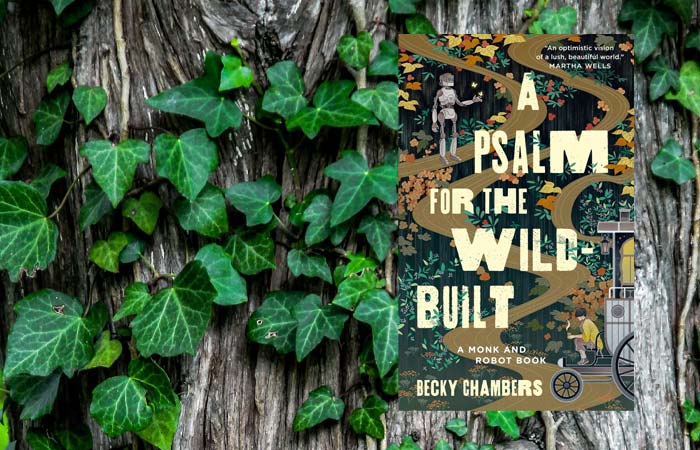
Monk and Robot: A book review
By Robin Beck
No Pallatives. No Promises: Radical acceptance as one woman's path to living with grief
By Amy Edelstein