
• About
  • Contact

Account
Account
Emergence Education LogoEmergence Education Logo
  • Books
  • Programs
  • Wisdom Cards
  • The Artist of PossibilityMagazine
  • Luminaries
  • One-on-One Sessions
  • Blog
Menu
Membership
Browse Articles
| Browse Issues
| Listen to Podcast
The Artist of
POSSIBILITY
Magazine
Image
  • Interview
    |
  • Issue 17: Contemplating Higher Dimensions
    /
February 15, 2024

Hyperobjects and the Higher Dimension of Jesus

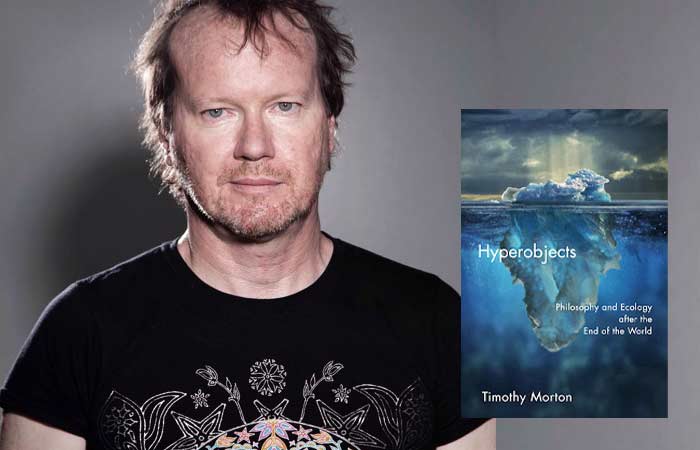
An interview with Dr. Timothy Morton

By Jeff Carreira

I read Dr. Timothy Morton’s book Hyperobjects: Philosophy and Ecology after the End of the World when it first came out a decade ago and I loved it. I knew I wanted to talk with him about this powerful idea and how it relates to higher dimensions of reality. What I didn’t know was that a year ago Tim experienced a powerful religious conversion that is changing the way he shares about everything. It was a pleasure to speak with him again. He’s a wonderful person with a powerful message to share.

Jeff Carreira: Hello Tim, it’s great to talk with you again and as I mentioned, this issue explores the possibility of higher dimensional realities and in that context I wanted to speak with you about the concept of hyperobjects that you’ve developed in your work. My understanding of a hyperobject is that it is a vast, higher dimensional object that pierces through into our familiar dimensional space in various ways, but they are so immense that it's impossible for us to get a holistic vision of them.

Timothy Morton: You're quite right. That's what they are. Absolutely. And one of the things about them is that they are physical. In order for something to be a hyperobject it must be connected to the physical world. A concept such as the Internet is not a hyperobject, unless you include the network of fiber optic cables and thousands of server farms pumping out masses of global warming heat and using enormous amounts of electricity and so on. In that material sense, we can say that the internet is a hyperobject.

When I wrote my book The Ecological Thought, I was thinking about our actions and the consequences of those actions in the future and realized that in the distant future two things will be true. Me, myself as Timothy Morton the person, will be completely irrelevant, but the fact that I just picked up this teapot will have a domino effect that will ripple out into the future. So it's a paradox. Who I am doesn't matter, but what I do matters hugely, and that effect magnifies as it propagates into the future. I started thinking about pollutants and in particular styrofoam. Aristotle's got this very toxic idea that a thing is reducible to what human beings use it for. So a cup is for drinking out of. As long as you can drink out of it, it's a cup. As long as it looks like a cup and quacks like a cup, it's a cup. You can make that cup out of plastic, you can make it out of bone china, you can make it out of styrofoam, and it doesn't matter. This way of thinking has led to trouble on this planet. By this definition a cup is a cup for about five minutes. Then it is a piece of styrofoam mush in a garbage dump somewhere with weird viscous liquids flowing around it. What is that? What do those bits of mashed up styrofoam become in the far future?

The future amalgamation of all that mashed up styrofoam is an object that massively transcends my idea of what an object is. It's a hyperobject. When I started using the word hyperobject, I found it had a very peculiar sensation to it. Ideas are not just abstract. Ideas always have a kind of feel to them. In philosophy when we speak of the way things feel, we are talking about phenomenology. By exploring the phenomenology of hyperobjects I was following the suggestion of Frederick Jameson and Slavoi Zizek who thought that we needed a new map of the space we live in because to change the space we're in, we have to know what that space is. Once you imagine one hyperobject such as styrofoam, you can imagine many others. A hyperobject is massive, relative to the thing that is perceiving it, relating to it, and accessing it. The biosphere is a hyperobject. And that is a better way of talking about it than using a word like nature, because the word hyperobject is more precise, and it's not normative. When people say nature, what they really mean is not unnatural. You must have a concept of unnaturalness juxtaposed to the idea of being natural, and I find that to be problematic. When I say the term hyperobject is preferable because it's not normative, I mean It doesn't contain an inherent sense of good versus bad.

Jeff Carreira: In your book, Hyperobjects: Philosophy and Ecology after the End of the World, you speak about the particular hyperobject of global warming. You have this beautiful chapter where you describe global warming as it comes in and out of phase. In doing this you are describing a hyperobject as a higher dimensional object that can't be seen as such, but pokes into our limited dimensional reality in the form of increased forest fires and various other ways that are all connected. The connection isn't directly visible, but it’s real. To me your book encourages people to defocus from their current lens on reality and refocus in a way that allows them to not exactly see hyperobjects, but to experience them even though they can’t see them.

Timothy Morton: Yes, you can experience them anyway. It's good to have a word for something. In the fairytale Rumplestiltskin, once the princess figures out the guy's name, she's got power over him. Calling it global warming is a little bit tricky because you need to realize that climate isn't weather. You've got to realize that some days it's going to rain, other days are going to be hot, still others will feel exactly like you remember from your childhood, and then there will be some that are completely strange and weird. And that's because this higher dimensional thing is passing through your world. It's moving. Global warming is moving. And it's a little bit like being a flatlander, a 2D stick figure person, who sees an apple pass through their flat world. They first see a little point, and then an apple slice, and then later something that's much, much bigger. Then it shrinks again and eventually becomes a point again.

As a 2D person you might wonder if these different states are actually connected. It was a point and now it's not, it's a different shape. If you zoom out to a certain scale you see that it’s one thing. It's a single entity, a hyperobject. You see all of Rumplestiltskin's activities and all of his threats, and if you haven’t identified him yet, he still has power over you. And it’s a kind of demonic power we are talking about, a power that comes from somewhere beyond what we can see. In my most recent book, Hell: In Search of a Christian Ecology, I speak of this as something satanic. There is something satanic about limitation, about being constrained and knowing that you're caught in something that you can’t identify. You wash your hands with antibacterial soap and you force the bacteria to evolve into a more dangerous version of itself. You emit carbon from your tailpipe and global warming destroys your world. It’s like we are living inside the devil's body. We are the devil's toenails, as it were. Realizing that you are inside the devil can be quite relieving. Instead of not knowing why bad things are happening and where it all comes from, we at least realize that we are part of this massive entity whose limitations are now constraining our lives. Even if I'm a white, male American who is enjoying the benefits of colonialism and industrial capitalism, my world is still being destroyed. There’s no escape.

Jeff Carreira: When I read The Ecological Thought, I heard you saying that we need to see beyond the idea that there is a problem to fight that is separate from us because we are embedded in the whole system.

Timothy Morton: I called it The Ecological Thought because that has a powerful feeling to it. And my book describes the phenomenology, or the feeling, of that idea. It's not about knowing that we are interconnected, it's about feeling the interconnection. The feeling of the idea is important because it comes from the future. The feeling of the idea is a future concept that hasn’t formed yet. That is how therapy works. You have feelings and sensations that you don't understand, and a few months, or years later, you put some words on them and you've got Rumpelstiltskin, you've named the demon.

Ideas are not the opposite of feelings. Ideas emerge out of a process of feeling-thinking-doing. When I write, I write from the future. A lot of my ideas are not quite ‘thinkable’ yet. They have a strongly utopian quality to them. And they have a feeling of a future that does not exist yet. That’s why people sometimes find my stuff hard to understand. I'm trying to see if I can pull some of that future into the present in the form of words.

Jeff Carreira: Let’s talk a little about your new book Hell: In Search of a Christian Ecology. In my reading of it, I felt that you are once again exploring hyperobjects. This time the interplay is between the hyperobjects of evil and the sacred. And you seem to be saying that the way we tend to relate to those two hyperobjects actually promotes evil.

Timothy Morton: The punchline of the book is about a very specific hyperobject, the biosphere. One of the conclusions of the book is that what we call the sacred or the holy is the phenomenology of biology. That’s because we grow out of the biosphere like apples grow out of trees. Our sense of embodiment is delayed quite literally by a few milliseconds because of the processing time of our nervous system. My embodied form is directly connected to the hyperobject of the biosphere. The part of my body I can experience now is not who I am now. Who I am now will only be experienced a millisecond from now. My sense of embodiment emerges from my future self.

I'm going to make a wild generalization about what you get in the VIP lounge of any axial age religion once you’ve done enough grunt work and you're allowed in. In that VIP lounge you find out that all of the stuff about the psychopath in the sky that wants to hurt you isn't really true. They just said that to keep people under control. What is really true is that you are part of that higher reality, and your job is to recognize it. You think about that, and you don’t get it, and every esoteric religion will tell you not to change that feeling of not quite getting it, because that is it. Why? Because this absolutely physical body is tantalizingly out of reach. It's here, but it's not here because it's a millisecond ago. This dislocation between the sense of self and the sense of environment is how you know that you are your environment. The feeling of being alive is sacred. And we ecological thinkers have got a problem because we yell at people in the key of, you've got to understand this scientific thing. But the feeling of the scientific thing is the thing called the sacred. And so people like me, who know at least some things about the Bible need to regain our confidence and not surrender religion to the right. Maybe academics should get back to the kind of thing that they might have been doing earlier in life. And I promise, if I ever get on TV I will not talk about global warming. I will talk about prayer and Jesus. I will talk about belief and what it means to believe in something.

Jeff Carreira: I have to say that I was a big fan of your writing already, but after reading Hell: In Search of a Christian Ecology I’m a bigger fan now. In that book you wrote about an awakening that you described as a recognition of your true body, not just the meat, but also the energetic capsule encasing the meat. Can you talk about that?.

Timothy Morton: I've studied Buddhism since I was 17 years old and the ecological thought was basically an iteration of the teachings of Mahayana Buddhism and esoteric Vajriana Buddhism. You've got your emptiness and you've got your luminosity. You've got the fact that things are unspeakable and there's lots of wiggle room everywhere. And you've got the fact that the way in which they're unspeakable is that they're suffused with Buddha nature. In other words, you've got the mesh and you've got the strange stranger as I describe them in my work. All that stuff is my way to talk about emptiness and luminosity. And I just kind of admitted that to myself in about 2020. I admitted that to myself because I remembered, with the help of a friend, that I had studied a lot of Buddhism and I can't help it coming out of my mouth when I talk. I realized that the reason people like what I say is because there's something quite deep behind it.

At the same time, the physical body is something that I'm deeply committed to despite my bookishness. I'm bookish enough to know that that isn't all there is. I'm not an anti-intellectual in any way, in fact, I think anti-intellectualism is one of the refuges of a very intellectual person. I am coming from a lot of personal familial pain, so I've been doing a lot of work, therapy, psychoanalysis, PTSD therapy, etc. And then last year, in 2023, I had surgery for five hernias. I thought I had one, but it actually turns out I had five and some of them went back probably to my childhood. The thing you feel at the end of an ordeal like that is grief, which is an emotion in the mode of ‘there's no way I can deal with this'. At that time I had been learning how to grieve properly from a powerful shaman and friend named Sobonfu.

Anyway, I got sliced open five different ways, and very soon after that, all these very good, important things happened. One of those was something that I can only describe as a conversion experience which means being born again, and that is so corny. I love the corniness. I love the embarrassingness of it. This is the kind of thing that shouldn't happen to sophisticated people. I thought I was a Buddhist. I was doing Dzogchen Buddhism. I was going on month long retreats. I was doing my Ngöndro preliminary practices with mala beads and visualizations. And then there's this little voice in my head saying, gotcha. And suddenly, I got Jesus. I can't say it any better than that.

And I thought no, not the evangelical pentecostal one. I shouldn't be doing that. That's the bad one. But on the twenty eighth of March, 2023, at 06:00 p.m. I was serving vegan meatballs to my son Simon and had a conversion experience. I'm not rejecting anything from my past, I just feel like I've got something new to say. I feel like this is actually the beginning of something. I'm being summoned by some kind of force to speak to the world with my partner Treena about these issues. And at the very least, someone like me and someone like her should model good, moral, religious, thoughts and behavior and not let other people steal all the moral authority. We do need to do something about global warming, but we’ve been talking about it wrong. The trouble is that ecological speech is implicitly revenge seeking. In a way, it's Old Testament speak. It says, you’ll see science was right and then you are going to get yours in the end. The religious person knows the apocalypse is coming, but they also know Jesus loves them anyway. Until we figure out that mercy is better language than revenge, we aren’t going to reach enough people.

Jeff Carreira: That's beautiful. Thank you very much. I look forward to seeing how your new message shapes itself and reaches out into the world.

Interviews

Featured image for “From False Identity to Divine Truth”

From False Identity to Divine Truth

An interview with Sadhvi Bhagawati Saraswati
Featured image for “Living Transmission: The Full Spectrum of Vedantic Awakening”

Living Transmission: The Full Spectrum of Vedantic Awakening

An interview with Acharya Shunya
Featured image for “Let Your Awakening Be a Force for Change”

Let Your Awakening Be a Force for Change

An interview with Jac O’Keeffe
Featured image for “Thinking the Impossible: New Myths for a Future Consciousness”

Thinking the Impossible: New Myths for a Future Consciousness

An interview with Dr. Jeffrey Kripal
Featured image for “Mapping the Noosphere: Science, Mysticism, and the Geometry of Consciousness”

Mapping the Noosphere: Science, Mysticism, and the Geometry of Consciousness

An Interview with Shelli Renée Joye
Browse All

Book Reviews

Featured image for “A Summary of the Fetzer Institute’s Sharing Spiritual Heritage Report”

A Summary of the Fetzer Institute’s Sharing Spiritual Heritage Report: An review by Ariela Cohen and Robin Beck

By Ariela Cohen

Featured image for “Choosing Earth, Choosing Us”

Choosing Earth, Choosing Us: A book review of Choosing Earth

By Robin Beck
Featured image for “Monk and Robot”

Monk and Robot: A book review

By Robin Beck
Featured image for “No Pallatives. No Promises”

No Pallatives. No Promises: Radical acceptance as one woman's path to living with grief

By Amy Edelstein

Featured image for “Freed Freedom”

Freed Freedom: Letters from a Sri Lanka Seeker to her Meditation Master

By Amy Edelstein
Browse All

Essays

Featured image for “The Gospel of Relaxation”

The Gospel of Relaxation

By Jeff Carreira
Featured image for “Bio-Psycho-Spiritual Foundations of Self-Realization”

Bio-Psycho-Spiritual Foundations of Self-Realization

By KD Meyers
Featured image for “Awakening Through the Body”

Awakening Through the Body

By Adriana Colotti Comel
Featured image for “What is Love? An Introspection”

What is Love? An Introspection

By Judith Marsden

Featured image for “Traditions are meant to be updated”

Traditions are meant to be updated

By Olivia Wu
Browse All

Book Excerpts

Featured image for “Divine Dragon of the Light”

Divine Dragon of the Light

By Member of The Mystery School
Featured image for “Higher Dimensional Beings”

Higher Dimensional Beings

By Jeff Carreira
Featured image for “My Journey to Inherent Freedom”

My Journey to Inherent Freedom

By Annelou Perrenoud
Featured image for “My Journey to Abiding Presence”

My Journey to Abiding Presence

By Marilyn Goswell
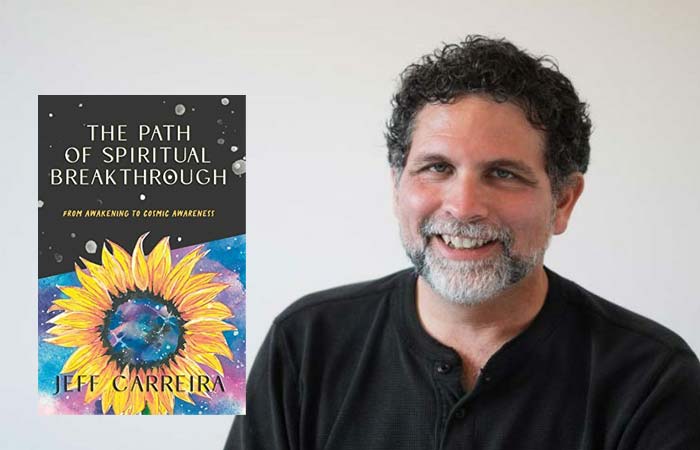
Featured image for “The Path of Spiritual Breakthrough”

The Path of Spiritual Breakthrough

By Jeff Carreira
Browse All

Featured Artists

Featured image for “Stella Criscuolo”

Stella Criscuolo

Featured image for “Shelli Renée Joye”

Shelli Renée Joye

Featured image for “Josephine Winsor”

Josephine Winsor

Featured image for “Leslie Raznick”

Leslie Raznick

Featured image for “Chris Lander”

Chris Lander

Browse All
Image

Books

  • All
  • Emergence Education Press
  • Transdimensional Fiction
  • Mystery School Press

Discover

  • Books
  • Programs
  • The Artist of Possibility
  • The Mystery School
  • Wisdom Cards
  • One on One Sessions

Magazine

  • Artwork
  • Book Excerpts
  • Book Reviews
  • Essays
  • Featured Artists
  • Interviews
  • Writing

About

  • About Emergence Education
  • Contact

Newsletter

Join our mailing list

Connect

  • Log In
  • Books
  • Programs
  • Wisdom Cards
  • The Artist of PossibilityMagazine
  • Luminaries
  • One-on-One Sessions
  • Blog

Join Our Mailing List