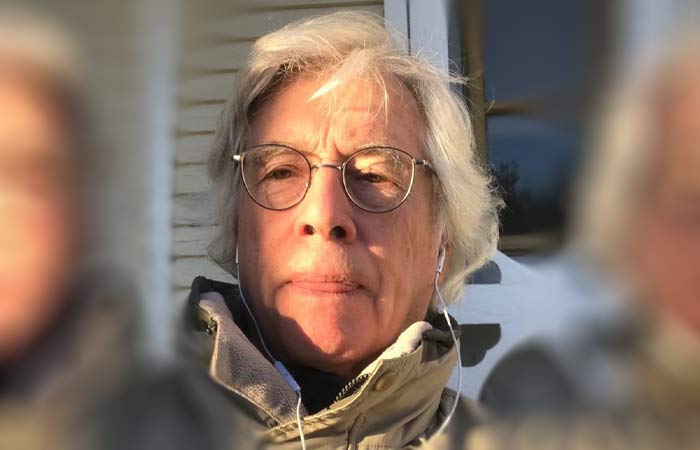

Jeff Carreira: In this issue we are exploring what form will living together take in the future. We at The Artist of Possibility realize that human beings are social and communal by nature. And those of us who are interested in higher spiritual growth know that there is a need to form communities that are based on higher human values. I wanted to speak with you because I know your work is centered around how the design of urban landscapes affects the consciousness of people living in cities. We all know this intuitively of course. I live in Philadelphia and some outdoor spaces are beautifully designed and make you feel good, and others much less so. Too often it seems that cities are designed without enough planning and care in a more or less haphazard way that seems to reflect market concerns more than aesthetic or even human considerations. Both well designed and poorly designed settings have a tremendous effect on the people that live in them every day. Would you begin by introducing us to what you do and why you feel it is important.
Theodore Eisenman: To your point, the mere fact that there's a relationship between landscape and people’s experience may not be a surprise to people. There is a fairly obvious relationship between the exterior material world and the interior life of individuals, groups of individuals, communities and even cultures. The effects of the urban environment on consciousness becomes more profound as we unpack the nature of it. It is fascinating to consider the extent to which a landscape is either elevating human potentials, and helping give birth to new cognitive and emotional capacities, or suppressing our higher potentials.
One of the important aspects of this topic that I am particularly interested in is how contact with the natural world affects the psycho-emotional well being of urban dwellers. Now, we have to hold the term “natural” in brackets because what constitutes something natural is often debated. There's a great deal of research that goes by the name of nature contact, that explores how green and blue landscapes, meaning those that feature water and vegetation, affect people. And this research fairly consistently shows improved psychological and emotional wellbeing when there is an increase in contact with natureful settings.
Another element that is known to affect human wellbeing is the scale to which a city is built. Most modern cities in the United States for example, are built to the scale of the automobile. They are comfortable for cars to drive through, but not for people to walk through. Living in a city that is not built to human scale is uncomfortable and tends to have a negative impact on human wellbeing. If you have to walk across eight lanes of traffic to get to the other side of the street it creates stress. It's uncomfortable to walk across and so the scale of design can have a significant impact on people.
One point that’s important to emphasize is that a great deal of attention goes toward questions about the amount of nature contact that people have in urban settings, and that’s great, but it is also important to remember that that is only one of the ways that urban design affects us at psychological and social levels.
Jeff Carreira: The human species appears to be inundated with so many problems from ecological disaster to racial inequities, to economic disparity, and throughout the twentieth century there have been many experiments in community building offering potential solutions to some of these problems. As noble as those experiments might be, the fact remains that many of them fail to realize the promise of their vision. I have always been very interested in alternative communities, but it occurs to me that perhaps the greatest communal experiment of the modern world is the city. An increasing percentage of the human family live in urban areas and it seems that getting cities right could have a tremendous impact on the future.
Perhaps there is something to learn from some of the many alternative communal experiments that can help us design better cities. Getting back to your point about nature contact, I am aware that most alternative communities are started in natural settings, but urban areas are often devoid of natural elements. The pavement of the streets becomes the curb, the sidewalk, and then the side of a building without any of the earth below showing at all. We are not only social creatures, we are also part of Earth, and it seems to me that our well-being must be dependent on having a psycho-emotional, and spiritual connection to our planet. Would you agree?
Theodore Eisenman: What you're basically articulating, even though you weren't using the term, is a theory known as biophilia. A related school of thought that explains our affinity with nature is called attention restoration theory. It is built on the recognition that human beings are busy focusing their attention a great deal of the time and so our minds don’t rest much. There is something about natural environments that brings our minds to rest and we crave the opportunity to relax our attention in nature. Another important thing to note is that biophilic elements can include man-made elements. Steven Kellert did a great deal of work showing that shapes and forms that mirror nature can have the similar biophilic effects as naturally occurring settings. This is particularly encouraging when we start thinking about urban areas that might not ever be able to incorporate large areas of naturally occurring landscape.
For example, if you've ever spent time on a street in Paris lined with cafes and ornate architecture, you will notice that many elements are biophilic and that everything is designed to the human scale. These urban settings feel better to us, which is part of the reason we want to visit them. Without having a great deal of vegetation, these areas still manage to have an uplifting effect on our psyche. Speaking very broadly, older European cities often feel better than the modern urban areas that we tend to find in the United States because they were designed for human scale.
Jeff Carreira: Yes, I suppose that is why we find them quaint. I enjoy spending time in older cities in Portugal because they do feel so quaint and comfortable to be in. I miss that sense in many areas around large US cities.
I want to ask you now about one of the people who has inspired your work, Patrick Geddes, who believed that well designed urban areas could have a tremendous beneficial effect on our consciousness. CIties could actually help us be happier, healthier, more cognitively capable, and spiritually awake. Geddes wanted to use urban design to uplift humanity.
Theodore Eisenman: Geddes occupies a large place in the urban planning cannon. In England he's considered to be the father of town planning. He held a vast vision that went well beyond merely how a town or city was physically planned. He saw the city as the theater wherein culture and consciousness evolve. He saw a reciprocal and cyclical relationship in which human consciousness is affected by the city, and then human beings continue to improve urban conditions from that higher consciousness. The city uplifts people who then build better cities that in turn lift them up again. As this cycle continues new potentials begin to manifest in human beings that are being supported by the environment they live in. Geddes had a vast and thrilling vision of the role that cities could play in human evolution. I am amazed at the thinking Geddes was engaged in over one hundred years ago.
Jeff Carreira: Yes it is very exciting to think about cities that are designed not just to be comfortable and healthy, but also to provide intellectual, emotional and spiritual stimulation. Cities designed to grow in. Given the enormous problems that most modern cities face it sounds like a wildly optimistic vision, and yet if it were made a priority, it seems a great deal of good could be generated.
Theodore Eisenman: There is one thing we need to mention here, and you alluded to it earlier, the vast majority of humans are going to be living in urban areas by the end of the century. 2008 was a significant threshold when 50.1% of human beings were for the first time ever in our history, living in urban areas. It is estimated that by the end of the century, some three quarters of all human beings will be living in cities. Most of the new urbanization is occurring in Asia and Africa. Europe, and North America experienced their big urban growth period during the Industrial Revolution. Given this vast growth in urban populations globally I feel that there is a moral imperative to create cities that uplift human beings. We simply must change the way we think about cities at this moment in history.
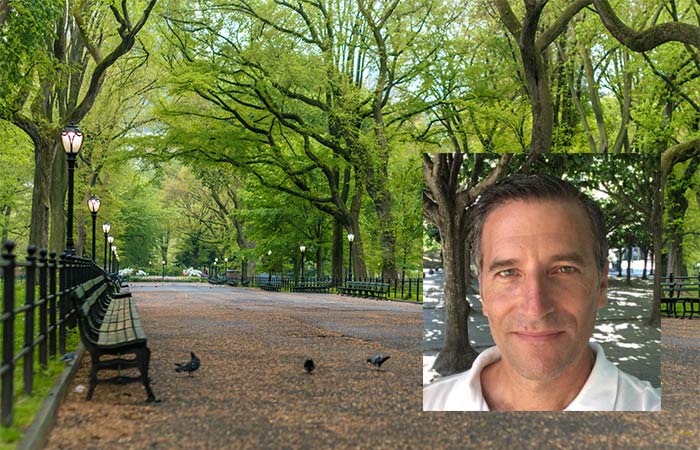
I also want to point out that it is easy for this discussion to become polarized, and sometimes cities can be seen as nothing more than parasites that feed on the natural environment. On the other hand you have people like Frederick Law Olmsted, considered to be the father of landscape architecture in the USA, who designed many beautiful urban parks including Central Park in New York City. Olmsted had a view of cities that was similar to Geddes. He saw the development of the city as symbiotic with the evolution of culture. He saw an intimate connection between the growth of towns and cultural markers such as the rise of democracy, the end of slavery, and increasing literacy.
So these are some very concrete ways that, if we talk about the evolution of culture and consciousness, urbanization has been very much embedded with.
Jeff Carreira: If cities can potentially have such a positive effect on human culture then I cannot agree with you more that we have a moral imperative to create better cities for the future. And I think that part of that effort needs to be changing the popular perception of cities so that we begin to see them as beneficial to life on Earth.
Theodore Eisenman: The thinking around that is starting to turn around largely because it has been shown that on a per capita basis, urban dwellers actually have a smaller ecological footprint than non-urban dwellers.
Jeff Carreira: Yes, and I also realize that at our current levels of population there simply isn’t enough room on the planet for everyone to abandon cities and move to the countryside, so again there is a moral imperative to improve the quality of city life because that is where future generations will live.
Theo, I want to thank you so much for talking with us today. I believe that the work that you are doing is a crucial part of the future of community.
Interviews

Artificial Intelligence and the Evolution of Consciousness
Interview with Steve McIntosh
Presence Cannot Be Simulated
Interview with Charles Eisenstein
Beyond the Creative Glass Ceiling
Interview with E. J. Gold and Claude Needham
“I Feel Responsible”: The Challenges of Bringing AI to Ethiopia
Interview with Mekdes Asefa
AI and the Future of Our Classrooms
Interview with Amy EdelsteinBook Reviews

A Summary of the Fetzer Institute’s Sharing Spiritual Heritage Report: A review by Ariela Cohen and Robin Beck
By Ariela Cohen
Choosing Earth, Choosing Us: Book Review of Choosing Earth
By Robin Beck

Everything, Everywhere, All at Once: Movie Review
By Jeff Sullivan
Monk and Robot: Book Review of A Psalm for the Wild-Built
By Robin Beck