
• About
  • Contact

Account
Account
Emergence Education LogoEmergence Education Logo
  • The Artist of PossibilityMagazine
  • Books
  • Wisdom Cards
  • Programs
Menu
The Mystery School
Issues | Articles | Artworks | Podcast
The Artist of
POSSIBILITY
articles
Image
  • Interview
    |
  • Issue 10: Visions of the Future and the Evolution of Spirituality
    /
April 15, 2022

Spiritual Equity

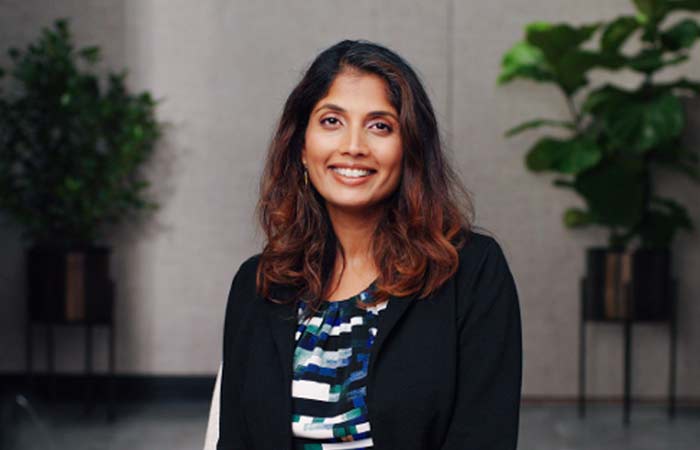
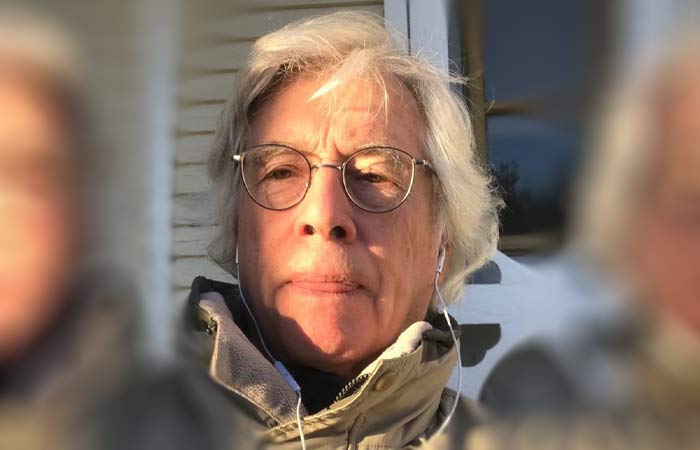
Interview with Tejal Tarro

By Jeff Carreira

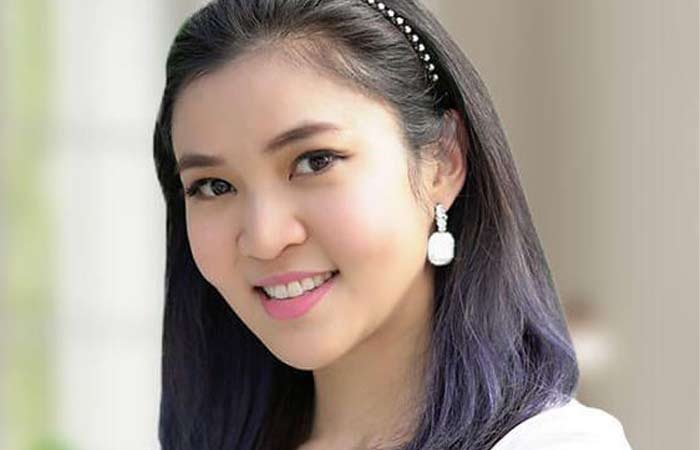
Tejal Tarro is known as the co-creator and Chief Catalyst of Human Transformation at AWE (Advancing Workplace Excellence), an organization dedicated to supporting leaders in the space of diversity and inclusion. Tejal is a practitioner of mindfulness and she has a deep passion and vision for creating equity and access for those who are marginalized in the workplace. We spoke with Tejal for this issue because we wanted to explore how greater diversity and inclusion could be brought to the alternative spiritual world.

Jeff Carreira: Hello Tejal and thank you for speaking with us. Let me start the discussion by saying that, over the last century, the idea that spirituality is something that evolves has become, at least within certain circles, popular. Of course, different people have different ideas about what that means, and in some of the conversations we have had for our issue on the evolution of spirituality, issues of equity and inclusion have been raised that I would like to speak with you about.

You and I have both been involved in alternative forms of spirituality for a long time. That cultural movement in its popular form today largely came out of the counterculture of the 1960s and then the human potential movement of the 1970s. It grew into the 1980s as the New Age movement and has continued to become more popular in ever new forms since. Today yoga and even meditation have entered mainstream culture and the acceptance and popularity of alternative spiritual forms continues to grow.

What you notice if you look at these worlds is that they do not tend to be culturally diverse and inclusive. By and large, the practitioners are white and of European descent. I had a conversation with a Zen teacher probably twenty years ago and asked him about this. He said at the time that people from disenfranchised subsets of the population are struggling for more basic freedoms, and until those are attained, it will be difficult for them to have the bandwidth for alternative spiritual pursuits.

That was at least twenty years ago and we don’t live in the same world. Movements like Me Too, the Black Lives Matter, and the awakening around gender fluidity, to mention just a few, are all challenging the accepted norms of our culture. I know that you are working directly with organizations and individuals around issues of social justice and equity, and I wanted to speak with you to ask you to share the perspective and wisdom you’ve gained so we can explore how the spiritual world might become more inclusive and reflect a higher level of what we might call spiritual equity.

But before we get into that, maybe you can start by telling our readers a bit about yourself.

Tejal Tarro: To speak about my spiritual life, I was born in the United States during the 1970s to immigrant parents. So, I have always felt that I existed on the outskirts of accepted norms even while my parents were busy trying to assimilate into those norms. I grew up with Hindu parents, although my father eventually converted to Buddhism, and I grew up in a neighborhood that was almost entirely made up of white Anglo-Saxon Protestants. I was the only Indian person there. So, I grew up within this conflict of worldviews. In Indian culture, I grew up within a patriarchal society that told me who could be a guru, who could be a teacher, and where a woman's place was in it all. I struggled with all of these things, and my parents were struggling to find Hinduism in the United States.

I grew up with a longing for spirituality and I didn't quite know how to access it. The Hari Krishnas were popular at the time and I got involved with that because the chanting and connection to Krisha matched my heritage, but it was far outside of the norm and so I kept it private and hidden from public view.

By the time I was in my early twenties, yoga was starting to take root and I was part of a community called Yogaville led by Swami Satchidananda. Things started connecting with me there, even though I still kept those parts of myself hidden and I was still struggling to find a community that I could connect to. I tried lots of things from Unitarian Christian churches, to a Course in Miracles work, and much more.

In terms of my work, I work in justice, equity, diversity, and inclusion. I work with people from institutions of higher education and other organizations to explore what is getting in the way of equity and inclusion and belonging.

Jeff Carreira: That's a beautiful introduction and perfect because we’re in the beginnings of an expanding cultural awakening that is looking at equity in terms of gender, race, socio-economic circumstances and more. We are seeing more and more clearly how we've been excluding a lot of people, sometimes knowingly and sometimes unknowingly, from full participation in the fruits of society. We've created social systems that exclude others and I wanted to ask you what you see of that in the world of alternative spirituality.

Tejal Tarro: I think it starts with the system. Any pattern of interactions between people is a system. That includes families, communities, organizations, and certainly our spiritual communities. In any system, there exists inequity due to a difference in the power dynamics.

We can look at this through a number of different lenses. First there's the power of position. If you’re the leader of a spiritual organization or part of a leadership group, you have positional power over deciding what services you provide, when you will do things, and how people gain access to them.

Then there's power inherent in expertise and experience. By having specific knowledge, we gain power, and by power we mean the ability to act and have influence over ourselves and others. In any system, there will be structures and norms in place that make it easier for some people to access and influence and act and make it harder for others.

Jeff Carreira: People involved with alternative forms of spirituality believe that they are important and that they can make a difference. And today it is clear that any vision we have of the future, or the evolution of spirituality, must include greater inclusion and diversity.

Tejal Tarro: Absolutely. I believe that all of us need to be at the table to create real change. And if some people don't have a seat at the table or they don't have access to knowledge or skills, they can’t fully share what they have to give.

This is about maximizing our co-creative potential by including all the voices at the table. It is about co-creation and everyone needs to be able to show up as their fullest, best self.

There is one level of addressing social systems change where we look at policies, procedures and resources. We might see that some people don’t have economic access, or physical access. And these are all important. But there is another layer of the power dynamics that involves methods of communication and our mental models. If we're really trying to be more inclusive, we have to look at all of those dimensions as well.

In spiritual communities, if people don’t find teachers that are like them, they don’t have the same access. You and I could be trying to share the same spiritual concept, for instance, but you're using your lived experiences and your vernacular to express it and will reach some people, while I might express it differently based on my lived experiences, and that might connect to somebody different. Having more diversity among those that share the wisdom attracts a more diverse audience as well.

Jeff Carreira: You know, this is a great point because, for myself, I know that initially I was thinking along the lines of inviting more diversity, but I realized that I may not be able to just invite more diversity because some people just can’t connect to me. We all connect in different ways with different people. In more recent years, I have become more interested in having this wisdom shared by more people representing more diverse backgrounds. And it feels like that is the only way that true inclusivity can happen.

Tejal Tarro: Yeah, I one hundred percent agree, and you know, I often feel very humbled by recognizing how deeply interwoven I am into the system and the patterns of it, and how much my ability to act and influence is determined by my lived experiences. I'm also beginning to shift how I think by embracing the fact that it doesn't have to be me out there doing all the work. There is so much more power in many voices.

Jeff Carreira: I have something else I would like to ask you. I already noted that the alternative spiritual world is not diverse and historically there are reasons why that is the case. For the past half of a century, there has been great inequity in access to this wisdom and these tools because, for people to be involved in this work, they needed to have disposable income and time and education, etc. So, there is a lack of diversity and the reasons for that are deep and systemic. Sometimes it is hard to know what will really work to change things.

Tejal Tarro: Yes. Absolutely. And it goes back to power. So, yes, there is inequity because some people haven't had the benefit of having decades to follow and work in these movements. So, we find that there are some groups under-represented. The way we can create equity so more people can rise to leadership in these communities is for those of us who have enjoyed privilege to recognize potential and invest in it. We can teach others while we also learn from them. We can create a mutual learning environment and our learning from each other becomes an investment in a more inclusive future.

Jeff Carreira: I'm feeling very moved because I think I am seeing another dimension of this. It strikes me that we often think about diversity, equity, justice and inclusion in social, political and economic terms. In that way of thinking, we tend to see a disadvantaged group that needs equal access. And of course, that is a part of the truth that cannot be denied.

At the same time, right now I am feeling that there's an awakening of the human soul that needs us to live as one. There is an awakening for all of us that cannot happen until the human family truly recognizes unity. I think that the soul of humanity wants to recreate itself as one.

Tejal Tarro: I love that you said that because something resonated for me in it. In spiritual communities, people will often claim that we're all one, but in some ways, I have sometimes experienced that as spiritual bypassing as it may have allowed for complacency because to truly see others as one, you must truly understand them. It's very easy to say, we're all one. But I think to make that real you have to go through the journey of giving access to others who are truly different. On a human level, we have to do the work and be intimately together in an inclusive way so that you can come to the deeper realization that we are truly one.

I've been in many spiritual communities where I hear that we're all one, but when I click through the zoom screen and see who is there, I still wonder if I really belong. Until you really get to know the deeper essences of me, you can't claim we’re one.

Jeff Carreira: That makes sense, and you know, to me, the spiritual quest is all about bringing heaven to Earth. So, in theory, we're all one. And I think in our highest moments, we have that sense of oneness, but until it's manifest here on Earth, it's not ultimately true. It might be true in heaven, but we need to make it true on Earth as well.

Talking to you now, it seems to me that inclusivity must include dismantling the economic, political, and cultural power inequities to open access and influence to everyone, but it also needs to include work at the level of the soul. I’m feeling so inspired by the possibility of creating a different experience of being human together with everyone.

Tejal Tarro: I'm excited too, because this can give many people greater access to spiritual liberation and to co-creative expression, and that will redefine what it means to be human in a much better way.

Jeff Carreira: Yes, and it doesn't just give greater access and influence to other people, because it is all of us that will benefit from this awakening. There is something that is possible for humanity that none of us will have access to until true inclusivity is realized. And this might be the awakening that's necessary to solve the problems of the world.

Tejal Tarro: Yes. I feel that.

Jeff Carreira: Me too. And it wants to manifest through all of this incredible work that people like you are doing.

Tejal Tarro: I believe that if people can realize equity and inclusivity at a spiritual level, we will be able to find the solutions to problems that so often evade us. I see us creating the practices, policies and economic systems needed to address issues like racial injustice, wealth inequality and climate change. The possibilities make my heart light up.

Interviews

Featured image for “Artificial Intelligence and the Evolution of Consciousness”

Artificial Intelligence and the Evolution of Consciousness

Interview with Steve McIntosh
Featured image for “Presence Cannot Be Simulated”

Presence Cannot Be Simulated

Interview with Charles Eisenstein
Featured image for “Beyond the Creative Glass Ceiling”

Beyond the Creative Glass Ceiling

Interview with E. J. Gold and Claude Needham
Featured image for ““I Feel Responsible”: The Challenges of Bringing AI to Ethiopia”

“I Feel Responsible”: The Challenges of Bringing AI to Ethiopia

Interview with Mekdes Asefa
Featured image for “AI and the Future of Our Classrooms”

AI and the Future of Our Classrooms

Interview with Amy Edelstein
Browse All

Book Reviews

Featured image for “A Summary of the Fetzer Institute’s Sharing Spiritual Heritage Report”

A Summary of the Fetzer Institute’s Sharing Spiritual Heritage Report: A review by Ariela Cohen and Robin Beck

By Ariela Cohen
Featured image for “Choosing Earth, Choosing Us”

Choosing Earth, Choosing Us: Book Review of Choosing Earth

By Robin Beck

Featured image for “Everything, Everywhere, All at Once”

Everything, Everywhere, All at Once: Movie Review

By Jeff Sullivan
Featured image for “Monk and Robot”

Monk and Robot: Book Review of A Psalm for the Wild-Built

By Robin Beck
Featured image for “No Pallatives. No Promises”

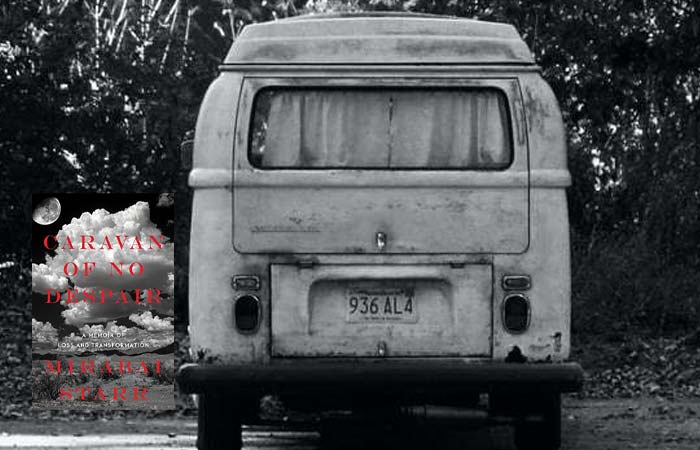
No Pallatives. No Promises: Book Review of Caravan of No Despair: A Memoir of Loss and Transformation

By Amy Edelstein
Browse All

Essays

Featured image for “The Gospel of Relaxation”

The Gospel of Relaxation

By Jeff Carreira
Featured image for “Bio-Psycho-Spiritual Foundations of Self-Realization”

Bio-Psycho-Spiritual Foundations of Self-Realization

By KD Meyers
Featured image for “Awakening Through the Body”

Awakening Through the Body

By Adriana Colotti Comel
Featured image for “What is Love? An Introspection”

What is Love? An Introspection

By Judith Marsden
Featured image for “Traditions are meant to be updated”

Traditions are meant to be updated

By Olivia Wu
Browse All

Book Excerpts

Featured image for “Divine Dragon of the Light”

Divine Dragon of the Light

By Member of The Mystery School
Featured image for “Higher Dimensional Beings”

Higher Dimensional Beings

By Jeff Carreira
Featured image for “My Journey to Inherent Freedom”

My Journey to Inherent Freedom

By Annelou Perrenoud
Featured image for “My Journey to Abiding Presence”

My Journey to Abiding Presence

By Marilyn Goswell
Featured image for “The Path of Spiritual Breakthrough”

The Path of Spiritual Breakthrough

By Jeff Carreira
Browse All

Featured Artists

Featured image for “E.J. Gold”

E.J. Gold

Featured image for “Stella Criscuolo”

Stella Criscuolo

Featured image for “Shelli Renée Joye”

Shelli Renée Joye

Featured image for “Josephine Winsor”

Josephine Winsor

Featured image for “Leslie Raznick”

Leslie Raznick

Browse All
Image

Magazine

  • Artworks
  • Book Excerpts
  • Book Reviews
  • Essays
  • Featured Artists
  • Interviews
  • Writing

Books

  • All Books
  • Emergence Education Press
  • Transdimensional Fiction
  • Mystery School Press

Discover

  • The Artist of Possibility
  • Books
  • Wisdom Cards
  • The Mystery School
  • Programs

About

  • About Emergence Education
  • Contact

Newsletter

Join our mailing list

Connect

  • Log In
  • The Artist of PossibilityMagazine
  • Books
  • Wisdom Cards
  • Programs

Join Our Mailing List