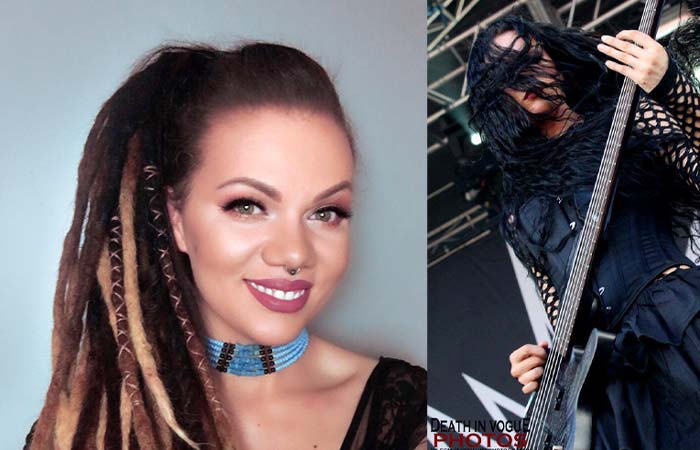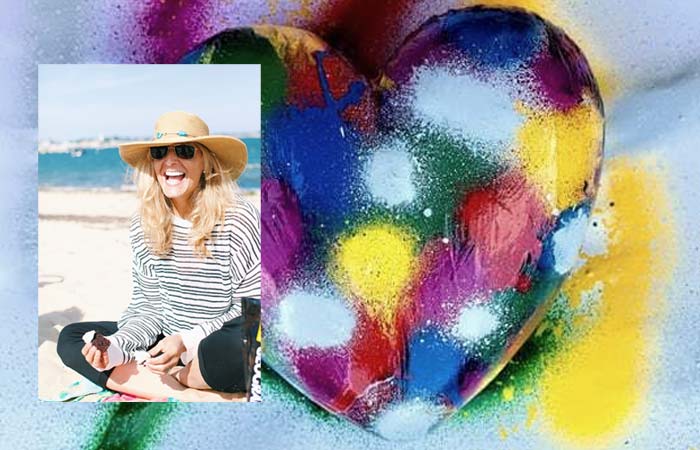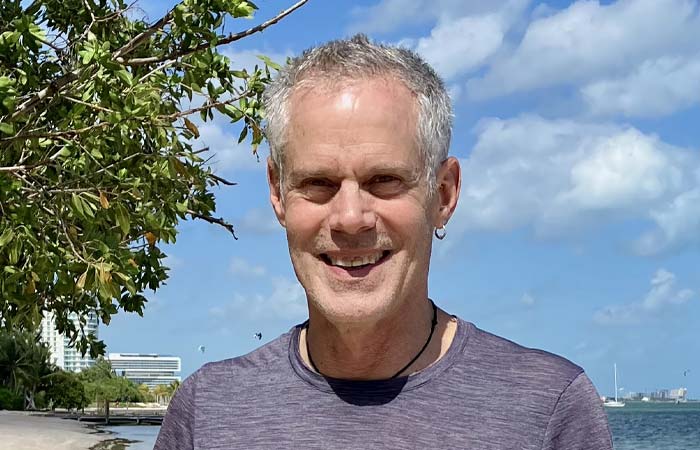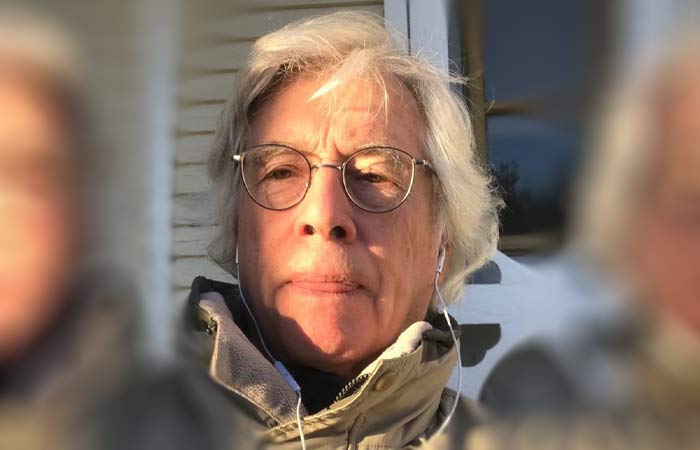

Jeff Carreira: Chela, you've been a professional musician for nearly a decade. Maybe you can tell us a little about how your professional life as a musician got started.
Chela Harper: I came from a family of musicians and I always dreamed of becoming an international touring musician. The opportunity to go on tour happened because someone discovered me on a small website I had created for musicians to collaborate with each other. I think the site had four members at the time. I really didn't think anything would come of it. But then I received an email from a popular Nu metal band called Coal Chamber.
The email mentioned something about wanting to talk to me about my career. It said, “We have some important news.” It seemed a little strange, almost like spam. Normally, I wouldn’t respond to something like that, but I did this time. I called them and it turned out to be an amazing opportunity. I went from working a day job in a bedding store to touring the world, in just a few months. It was pretty amazing to start that way.
Coal Chamber was an internationally recognized act that I had actually been a fan of in High School. They were from L.A. I was from Canada. It was a huge jump from playing in local bands and small bars, to that, but I ended up playing bass with Coal Chamber for three years during their international reunion tour.
After I finished with Coal Chamber, I was approached to play with a band called White Empress. This was exciting because rather than learning previously written material, I had the opportunity to contribute creatively and write my own bass lines. After White Empress, I played in another band, a goth rock band from South Africa called The Awakening.
Jeff Carreira: In addition to your professional touring career, you also have your own musical project. Can you tell us about that?
Chela Harper: I started a solo project called Sarasvati, and for me, that was a project that came into being because I wanted to do something from my heart and without needing to impress anyone, without needing to sell anything. Something that was only in fulfillment of my own deepest intuition and creative desires. I think I was twenty-one when I started that project and before that, I had often played in bands that left me feeling a little inadequate, and where I wasn't able to express myself creatively. Starting this project gave me an outlet for full creative and authentic self-expression.
Jeff Carreira: If people see photos of you on stage, or videos of you playing, they would probably assume that you were born with a naturally extroverted personality because of how you outpour onstage, but that’s not actually the case is it?
Chela Harper: No, definitely not. Growing up I was profoundly introverted and, in some ways, I’m almost more introverted now. I've learned to express myself and socialize, so I appear to be less introverted, but I'm actually still very shy. And yes, when people see me on stage, they think I must be this totally eccentric spinning-around-the-room type of person, but I’m not really.
Jeff Carreira: It is fascinating to learn that you’re actually a shy person. So how did you find the courage to let go on stage?
Chela Harper: That was completely by accident. My mom was a musician and she would often play shows. I would go to the shows and dance around and get really into it. And dancing like that, I felt less shy. I didn't feel like I needed to reserve myself because I was so excited and moved by the music. Once when I was very young, I had the opportunity to go on stage with my mom and her sister to sing backup vocals to an audience of about 5,000 people. I got up on stage and I was intimidated by how many people there were, but I was so committed to expressing the beauty of the music, that when I opened my mouth, I just felt free and in flow. That feeling became the driving force of my life. I just wanted to keep engaging with it.
Jeff Carreira: So, from that early age you experienced an unleashing of creative flow and that experience has guided you to this day, and now your work is dedicated to inviting others to unleash their own creative potential.
Chela Harper: Exactly. That experience planted a seed that just continued to grow as I did. As I got older and started to write my own music that space became my first love. And it just grows each and every time I experience it. I was very naturally drawn to create from a space that was spontaneous. Sometimes when I write vocal melodies for a song, I don’t even want to hear the song first. I just hit the record button and the play button at the same time and sing as I hear. I just allow words, or even just sounds, to come out, and I don’t even care if they make sense, in fact they almost never make sense. I'm just allowing the sounds to come out so the melody will flow naturally. Later I can use the melody and put my thoughts into it, but the initial take is purely spontaneous. I’m just listening and witnessing what comes through me… I can't even describe that. It's just a beautiful experience.
Jeff Carreira: I would say that one way you can understand spiritual awakening is when the gap between you and the emergence of this moment diminishes to zero. We are conditioned to hold ourselves a little bit back from the moment. We create a sort of buffer so that we can see what's happening and have a little bit of time to prepare and respond. That allows us to feel safe. The spontaneous flow state you’re talking about means giving up that space and entering directly into the stream of creation until you become one with the emergence of the moment. When we experience this, we realize this is what it feels like to be truly alive. To be alive in this way there is a vulnerability we have to be willing to endure. In another conversation we had, you mentioned a time when you experienced this kind of spontaneous flow while playing with Coal Chamber. Can you tell us about that?
Chela Harper: Yes, that was my second experience of that spontaneous flow. Leading up to the tour with Coal Chamber, I became very anxious – a bit unstable and ungrounded. I felt like it was all more than I could handle. I was doubting myself even though I was practicing every day. I was doing all the things I was supposed to do. I was really prepared, but I was terrified. The first show we were going to play was opening for Marilyn Manson and people that know the genre probably know Marilyn Manson even if you don't like his music. You can imagine what it was like for little small town me to be opening for someone like that. But even that didn’t compare to how nervous I was about our second show that was going to be played in front of tens of thousands of people during a festival in Australia. I was nervous and I felt like I just had to be perfect. I had to fill the shoes of the bass player that had played with Coal Chamber for 10 years. That was the person everyone really wanted to see, but they weren’t going to be there. I just didn’t think I could live up to it. I just kept building up doomsday scenarios in my head – it was becoming traumatic. I was in trauma even before stepping onto the plane to Australia.
In was in such a state of panic that I just quit my job at the bedding store. I was 26 years old and I didn’t know what else to do. I was so scared. So, I called my mom and she drove three hours to pick me up from the store and I never went back. I was experiencing such an extreme amount of panic and stress. Then I went to L.A. and met everyone. I wasn’t eating or sleeping and I was so nervous but I was starting to warm up. The people in the band were really nice. I was starting to enjoy the experience but then, two days before the flight, I stopped sleeping completely and got really sick. I didn’t sleep for the whole plane ride and, at that time, I was also afraid of flying.
Fast forward to me standing backstage at the show. I've got my bass in my hand. I've got my outfit on. I've got my makeup on and I'm starting to really jump into the role of this person who's going to get on stage. I was so tired and so I just let go. I just let the fear go. It wasn't a conscious effort. It was more like I was just too tired to be afraid. I grabbed the curtain and looked outside and saw all the people in the audience. It was at least 10,000 people and something just came over me. It was an unusual feeling of comfort, relaxation and complete trust that I was in the right place. I was still nervous, but I surrendered to what was real, and to being in the right place. That feeling of surrender carried me through the entire show. From the moment I got on stage, I felt comfortable and poised and confident. Which is not something I generally feel in front of a large group of people. I just stepped out onto the stage and it was like the music was playing itself the whole time. That is one of the only shows that I didn’t make a single mistake on stage. It was an incredible experience of flow. I felt moved by it.
Jeff Carreira: I want to use that experience to jump into a little conversation about the nature of flow states with you. As I said, I see spiritual awakening as a kind of existential flow state. I got very interested in flow states because of something that I experienced in a theatrical improv training I did once. Our exercise was to perform a scene of a group of architects sitting at a table. At one point someone said “Where is Frannie. We need her,” and I heard coming out of my mouth, “Oh she just left for coffee. We should send someone to get her.” I was stunned because I didn't know where those words came from. They didn't come from my mind. I hadn't thought about them beforehand. They just popped out of my mouth as if it were true. It was like the scene needed that line, so it pulled it out of my mouth. Which reminds me of how you just described feeling like the music was playing itself.
So later, I started reading more about flow states and I read a beautiful story of Laird Hamilton who's a professional surfer and he was the first person to surf a really big monster wave when nobody thought it was possible. People were watching from the beach as he disappeared into the tube of a gigantic wave. Everyone thought he was going to die, but then he shot out the other side. It was the first time anyone had surfed a wave that big. Later, he described how he went into the tube and slipped into a flow state where he felt completely calm, completely one with the wave, and he knew that everything was going to be fine. He instinctively just reached his hand back and dragged his hand through the water. And that drag was exactly what he needed to ride the wave without getting tossed into broken pieces. When people asked him how he knew to do that, he said he didn't know, it just happened.
And years ago, I read a story about a group of fire jumpers who airdrop into forest fires by parachute. They were in a fire when the wind changed, and the fire started moving right toward them. They were running for the safety of some distant rocks, but the fire was moving so fast there was no way they could make it in time. One of them spontaneously shouted, “Stop and dig” and a few of them started digging a whole to lay in. The fire blew over them so fast that it didn't burn them. Unfortunately, the ones who didn't stop never made it to the rocks. Today, this is a technique that firefighters are trained to use in similar situations. Again, when the fire jumper who shouted ‘’stop and dig,’’ was asked how he knew to do that, he said he didn't know how to do it. It just happened.
One of the things that is so amazing about flow states is they give you access to capacities and wisdom far beyond what we are used to. Our normal range of abilities pale in comparison to the capacities we come in contact with when we let go. My experience, like yours, has been that things happen in that kind of flow state that I could never have done with just my skills and effort. You could never have played the way you did at that festival just by trying. You needed to let go for that to happen.
I know that you are a meditation coach and I believe that spiritual pursuits like meditation can help us learn how to let go into flow states and, ultimately, that leads to the emergence of capacities and possibilities that don't exist otherwise. This is part of what I would say it means to be an artist of possibility. I would love to hear you speak about your experience of expanded human capacities as a result of entering flow states.
Chela Harper: When you try to figure things out and direct the creative flow or try to control it or place expectations on it, it chokes out the flow. Through meditation practice, you really learn to become an observer and a witness of your experience. This is so crucial because it is what allows you to develop the ability to let go of control in the creative process. It allows for the emergence of what I’ve heard you call, the creative impulse. That force is always at work, but when we try to control it, it doesn't flow. It starts to get stuck, and we experience that as resistance or blocks. We need to stop trying to be creative in some forced way and learn how to maintain an environment that ignites and sustains creative flow. What really drives me is helping people optimize their own creative flow because I genuinely feel that the purpose of this life is to be able to creatively express ourselves fully and authentically.
Jeff Carreira: Beautiful. You and I resonate so well in that. I believe our fulfillment comes from making our biggest contribution – from what we're giving to this world. In my experience that's where fulfillment is found. Part of why I'm driven to the kind of work I do is because it liberates people to give more of themselves. It liberates them from the false ideas and insecurities and fears that keep us small so that we never see what's really possible for our life and for us. Anything I can do that can help someone realize their full potential is beyond gratifying to me.
Chela Harper: I believe that we’re all creative. That is what is so incredibly fascinating and beautiful to me about being human. We have this ability to co-create and to be a vessel for creativity to emerge into the world and to move from Spirit through consciousness and into matter. We ourselves are instruments that can be played by the universe. I am so drawn to that creative spark in everyone. I usually work with musicians, actors, performers, comic book writers and authors – people we would tend to label as creative, but I believe that all people are creative. Many people don't think they’re creative and they don't think they have anything to create, but everyone has something to create. If we think we need to produce something from scratch out of nothing, it’s intimidating. That belief can cause resistance. But if we realize that there's something that animates the entire universe, there's a creative force that is within all things, and that makes the world and the universe continue to evolve and to create and recreate itself, then we see that there is a desire, a deep desire within all things to create in some way. What I want to do is help people connect to that force and learn to trust that process so they know that if they open themselves up to it and surrender to it, that something will happen.
At first, it may not be easy because we have put up walls of fear that prevent us from giving up control. There is a process of transmuting that fear into trust and into love and into a partnership with creation. When you go through that, you enter into a collaboration with something else, a greater creative force in the universe that can move through you.
Interviews

Artificial Intelligence and the Evolution of Consciousness
Interview with Steve McIntosh
Presence Cannot Be Simulated
Interview with Charles Eisenstein
Beyond the Creative Glass Ceiling
Interview with E. J. Gold and Claude Needham
“I Feel Responsible”: The Challenges of Bringing AI to Ethiopia
Interview with Mekdes Asefa
AI and the Future of Our Classrooms
Interview with Amy EdelsteinBook Reviews

A Summary of the Fetzer Institute’s Sharing Spiritual Heritage Report: A review by Ariela Cohen and Robin Beck
By Ariela Cohen

Choosing Earth, Choosing Us: Book Review of Choosing Earth
By Robin Beck
Everything, Everywhere, All at Once: Movie Review
By Jeff Sullivan
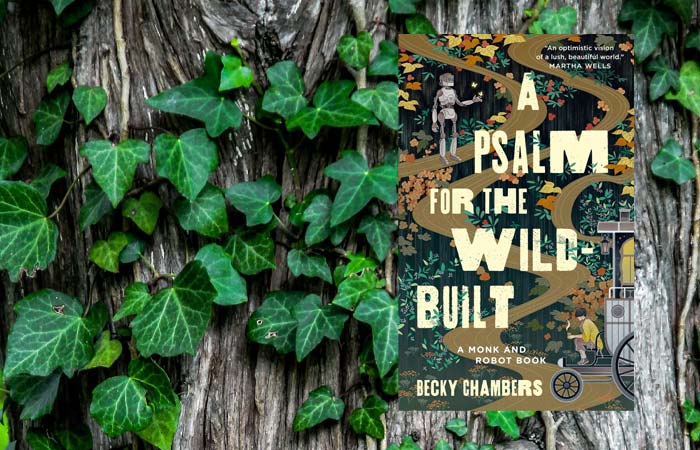
Monk and Robot: Book Review of A Psalm for the Wild-Built
By Robin Beck