
The Artist of
POSSIBILITY
articles
Image
April 15, 2020

Happiness Happens

Interview with Phil Moore
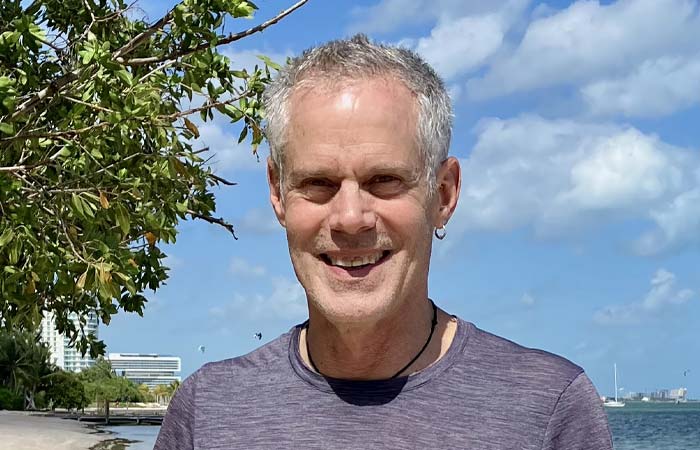
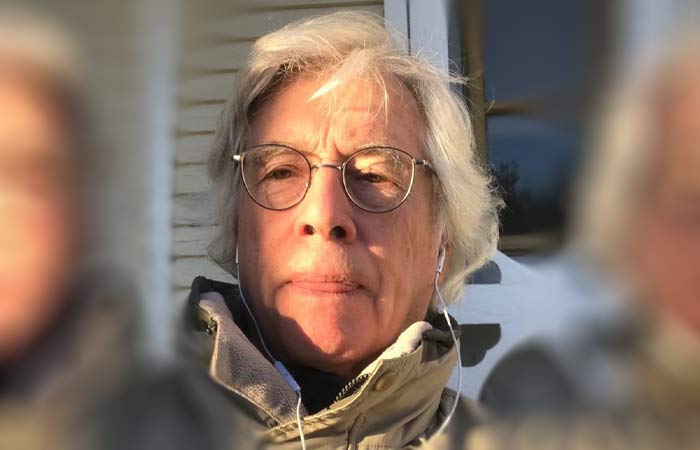
In the following interview, I had the pleasure of speaking with Phil Moore about his understanding of happiness. Phil is one of our teachers in The Mystery School. He was also the director of a school that he ran and developed for over four decades - The Upland Hills School, north of Detroit. During his time as a director, Phil developed an inspired learning community dedicated to a pedagogical approach of love-based education, and published a book The Future of Children. I am delighted to have had the opportunity to talk with this inspirational and insightful Artist of Possibility.

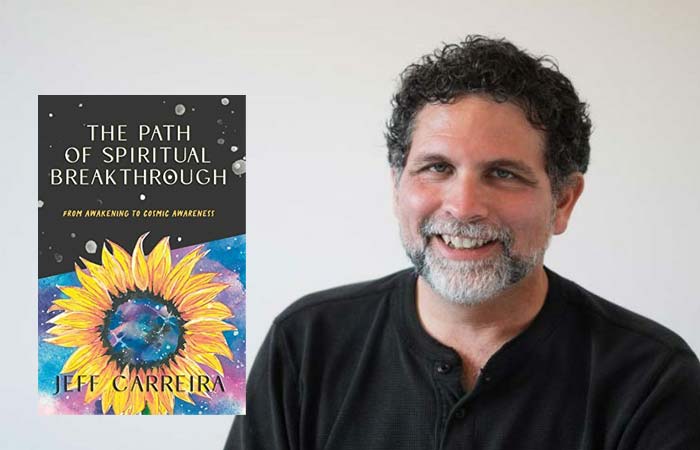
Jeff Carreira: Hi Phil, first of all thank you so much for taking the time to share your thoughts with us today. Here's my first question: Can you start by speaking about what you think happiness is and what cultivates it?

Phil Moore: Thanks to my experience of being around children at Upland Hills School – where being outside for half of a day and playing is a central part of what we do, I have seen how happiness is a byproduct of losing yourself in an activity or an experience. It's not necessarily something you are looking for; it's something that emerges. Having worked with children at the school for forty- eight years, the most beautiful thing I've realized is that happiness emerges when we fall in love with each other or fall in love with the natural world.

Falling in love with each other is the essence of making friends. It’s when Victor meets Marty, they're five years old, and they just connect. There's a spark that happens and it never diminishes. It continues to be a part of their relationship. In that magic, happiness happens.

Jeff Carreira: So, you see happiness as an emergent property of the love of friendship. Can you say more about the kind of happiness that emerges from friendship? You've been involved with Upland Hills School for nearly five decades and, in that time, you've seen lots of kids come and go. Not every kid bonds with every other kid, right? So, what is it that makes two kids become instantaneous best friends for life?

Phil Moore: Well, first of all, it’s a big mystery, so I don’t really know, but I do think it’s related to being able to see each other's soul in a certain unguarded and open way. There is something that happens in those moments of connection that is very magical. It often involves laughter. Two people just really get each other’s sense of humor and that creates a bond because finally someone gets you. You say something that everyone thinks is weird, but your friend is laughing hysterically and there’s no reason for you to explain a thing. In the school, I’ve also seen how compassion can be the trigger. Someone gets hurt and someone else comes to help. That kind of compassionate caring for someone else and listening to them is very important.

Jeff Carreira: It seems that the root of happiness is love. Upland Hills School, that you directed for many years, is built on what you call a love-based education. When I had the chance to visit the school a few years ago, it was clear to me that there was so much love alive between the children, and the staff. As a visitor there, I experienced tremendous open- heartedness, compassion, joy and happiness. From what you’ve been saying, it sounds like the happiness and joy are byproducts of the love, caring and concern. When love is present, there is a natural bubbling up of happiness and joy.

Phil Moore: It's all interwoven. I think of the DNA of love with strands that look like yarn fibers twisted together, and that is how I experience it all. Mutual love creates mutual awareness. That mutual awareness is similar to what to the Buddhist teacher Thich Nhat Hanh calls the inter-being. Whenever we're together, there's an inter-being connecting us that is energetically alive and we can feel it. It connects us, encircles us, and creates the atmosphere that shapes our interactions and the feeling of being together. It brings a sense of peace and equanimity between us. That mutual awareness is an antidote to the anxiety that we experience so much at this time in our culture.

There was something that happened during your visit that illustrates the power of mutual awareness, and I'll never forget it. You were speaking to me and I was listening intently to every word. All of a sudden, some child put their arms around my stomach from behind me and gently hugged me. It was completely unsolicited. I grabbed the little wrists and had no idea who it was. It was such a beautiful and tender moment. It just arose out of the loving atmosphere of the moment. I can't even talk about it now without feeling the emotion.

When you feel that kind of loving expansiveness, you immediately want to give it away. You just want to pay it forward, as they say. I felt so good, so loved, and so blessed by that little hug that I wanted to hug someone else. That kind of feeling wants to spread itself.

Jeff Carreira: Since we’re sharing stories, I had a similar encounter with one of the children that I will never forget. I was participating in a game with two teachers and about twenty kids of about five or six years old. There was one little girl who ran over to sit next to me, but there was no room. She looked sad for a moment and she smiled, turned around, and sat on my crossed legs. I felt an explosion of joy and happiness. That kind of innocent, unguarded, openhearted trust is so beautiful. Maybe happiness is the natural result of relaxing our defensiveness and being open-hearted and vulnerable. Maybe happiness is there before we start protecting ourselves against the world. And when circumstances allow us to relax, happiness inevitably returns.

Phil Moore: The biggest distinction between a love-based school and a fear-based school is that the first priority of a love-based school is to maintain a context of mutual awareness and compassion. We've been trained to think more about content than context. We worry about teaching trigonometry, or calculus, or biology. We're focused on the content. But the context, the environment in which the content is being taught and learned, is what's truly important. Miracles constantly arise if the atmosphere is right and if we, students and teachers alike, are all committed to maintaining that atmosphere. One of the beautiful things about children is that, when they're empowered and loved, they spread that and build a field of open-heartedness. That atmosphere is always there when things are good and when things are bad.

When Jean Houston visited our school, she had told us that she had consulted in over 100 schools in countries all over the world. She addressed our student body and asked the children if they knew that this was an amazing school. They all enthusiastically said yes. But what impressed her the most was that they were enthusiastic without being out of control. She hadn’t seen another group of children who were so uninhibited without anyone taking it over the edge and getting a little too loud or a little too rambunctious. What I would say is that they were able to maintain the context. And the contextual container includes both freedom and boundaries, and everyone is on board with them.

Jeff Carreira: The reason Upland Hills generates so much happiness is because everyone is committed to holding an atmosphere of love, and that context includes things like mutual respect and responsibility. That context safeguards the open-heartedness of the atmosphere and keeps it from closing down.

Phil Moore: Exactly. That atmosphere of love and open-heartedness is the source of happiness in Upland Hills School.

Interviews

Book Reviews

Essays

Book Excerpts

Featured Artists