
w: lineageoflight.com
Jeff Carreira: Hello Jody, thank you for speaking with us. I wonder if you would start by saying a little about yourself as an introduction to our readers.
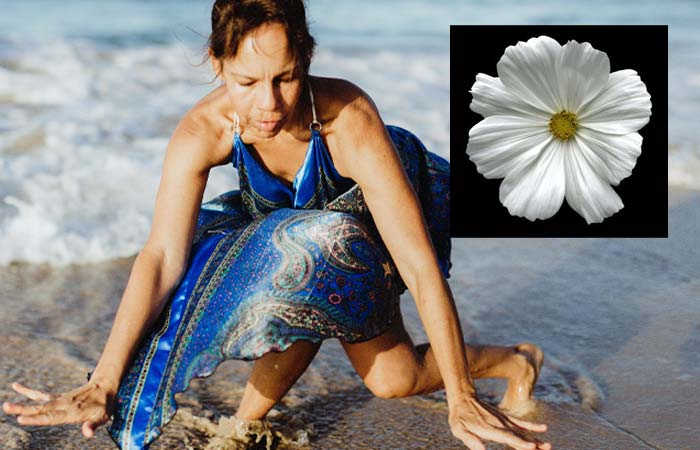
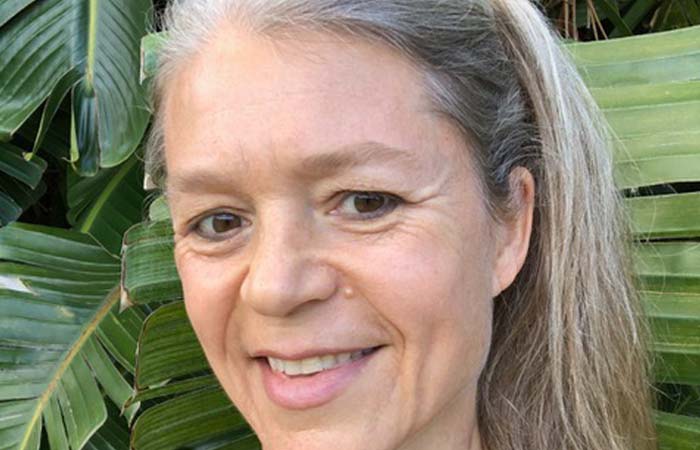
Jody Mountain: Well, very briefly, I was born in Jamaica where I studied Jamaican folk dance from the age of four. So I've always been very body-oriented you could say. I went to college in Canada and ended up in Modern Dance and Choreography in Toronto.
Surrounded by sore bodies, as well as my own, I started massaging my fellow dancers. Soon, they began offering me money for massages and at that time, as a starving artist, $15 was very helpful. At the same time I started to get deeply fascinated by the body and was starting to look into massage training when I happened to see that someone who described themselves as a student of a kahuna in Hawaii was giving demonstrations and workshops in the area. That demonstration became a pivotal moment in my life. I felt a deep resonance with the work he was sharing and I knew that what he was saying about it was true.
I had such a deep visceral reaction to the work that I dropped everything else I was doing and started on the path that has become my life. I eventually moved to Hawaii and studied with the same Kahuna who had trained the person I met in Toronto. His name was Kahu Abraham Kawai'i. I have been a practitioner and a teacher in the bodywork based indigenous tradition of Ancient Lomi Lomi ever since.
Jeff Carreira: Can you tell us more about your work with Kahu Abraham Kawai'i?
Jody Mountain: Kahu only taught in immersive workshops of 14 days or more at his homestead. In this way, it was very unlike typical Western learning. In the West we tend to emphasize intellectual learning. We exchange ideas. The learning with Kahu was deeply experiential and inclusive of much more of who we are and what we are made of.
In the west learning tends to come in through the mind and, ideally, is later integrated into the body. In this indigenous tradition the learning comes in through the body. Kahu would always say that the body gets it first and the mind catches up later.
I believe this learning style more accurately reflects the truth of who we are. Human beings are not just mental creatures, we are an intricate and infinite amalgamation of interconnections between mind, thought, emotion, body, memory, hopes, dreams, and images. All of that and more is informing our experience right now.
We are made up of more cellular processes than we are of ideas, thoughts and memories. We're 99% flesh and blood and, most importantly, the spark of life that is moving through us all the time.
The spark of life, the spirit, that we are is inseparable from our physical being. We can't take it out. We can't remove it because it's not a separate part of us. It's part and parcel of all that we are. So in the tradition of Ancient Lomi Lomi the learning is flipped so the experience of the body informs the mind.
Rather than working with ideas, we allow the life force to awaken and inform the mind. So the mind is secondary. In this way the mind becomes the servant of the spirit, but where we find the spirit is through the body. This may seem a bit counter intuitive, but that is the indigenous worldview and if we embrace it, it flips our perception of who we are and how we perceive the world, upside down.
Jeff Carreira: You know, on my path I’ve often started with ideas. I hear something and it really resonates with me and I believe that it is true. After that I might work with the idea for months or even years and then something happens and the understanding finally clicks in at a different level. It’s like it finally seeped into my body. An illumination occurs, my body relaxes and the idea rushes in.
Now hearing you I'm wondering if that initial recognition was actually a bodily recognition and then it took time for the mind to catch up.
Jody Mountain: Yes that’s how I would see it. I think most things that resonate with us deeply are actually impacting us on a visceral level in the body. The learning happens in the body first, but we’re not taught to see it that way.
We're taught that the body is just a machine that transports our mind and spirit from place to place. We’re told that we need to take care of it. You know, if you eat the right food, drink lots of water and exercise, your vehicle will last a long time. So we’re taught to take care of it, but we aren’t taught to listen to it.
There's nothing wrong with this Western way of learning. It has brought tremendous growth for many people in many ways. But we are so oversaturated with that singular way of being. The neglect of other viewpoints has huge repercussions for us personally and for the planet.
If we overly rely on metal cognition, then the brain is effectively in charge of the body, but as I said earlier, the body is actually so much more of who we are.
Jeff Carreira: If I use my experience of encountering your work, I went to you for a massage. I had no idea that you were anything but a massage therapist, so I wasn't looking for anything beyond a good massage. And then when you worked on me I could feel that you were gently influencing the energy in my body.
Sometime later, I was reading some of your blog posts and I found myself having very powerful experiences of energetic opening. I found myself seeing and feeling a sense of light and energy spinning all around me. And that was just from a blog post. I feel that the work was somehow communicating with me. And my body was recognizing something that my mind was skeptical about.
Jody Mountain: Yeah, that's beautiful. Jeff. And I think many of us have had experiences where something doesn't really make sense, but we just are compelled to follow it anyway.
The idea that the learning is coming in through the body, or you could say that your body wakes up to something, is accurate to my experience of this work because the work is really just life meeting life.
As a practitioner and a teacher I emphasize that what we are doing is accessing our own life force so that it can come forward in our experience. When I put my hands on another human being, I'm aware that I’m not just touching someone’s back or leg or arm, I’m actually touching their entire life. The consciousness of your body is held in your cells, and that bodily consciousness has been through every experience of every moment of your life. And it is all still there in your body now.
I know that I am touching the totality of who you are when I touch your body, but I also know that I can't possibly know all of the moments of your life and how they impacted and shaped you, and how they created your hopes and dreams.
The bodywork of Ancient Lomi Lomi is holographic or multi-dimensional in the sense that we are in contact with the past, present and even the future of who you are. That is so huge. I can't possibly know how to help you. I can’t possibly know cognitively what you need. My mind simply could never hold it all, but the life force in me and then the life force in you wake up and make contact. And that meeting of life with life is how the work gets done.
I like to use the example of a dog at a party. Everyone is chatting and enjoying dinner and the dog is sitting there with its head on its paws. And then someone walks over and pats the dog on the head and the dog starts wagging its tail and gets excited. In the same way. The life energy that is being ignored in someone because they have never been trained to pay attention to it, gets touched by the life force in me and it wakes up. That is the work that gets done. I think that is what you felt in the massage with me.
The life force in us is our connection to the infinite and that includes every potential for healing there could be. It also contains all of the ways that our system wants to express its fullest potential. If we allow it to be free, the life force energy will do all the healing.
In most of us the life force has been inhibited by negative ideas about who we are and what we can and cannot do and how we are supposed to be. Those ideas clamp down on our life force. Our life force can only pass through whatever opening is allowed, but the rest of the time it has to remain under wraps. And that's not the path to our full potential. At best, it's a path to fulfilling our ideas about who we are.
Jeff Carreira: Would you say that the work of Ancient Lomi Lomi is ultimately about realizing our full potential?
Jody Mountain: Yes, I think you could say that. It is certainly about more than just healing the physical body. The way that I have come to think about it is that this work raises your internal speed, by which I mean the speed with which we can meet our own life force.
This work allows us to increase the speed with which we can communicate directly with our own life force. So that means that instead of always approaching life through the conscious mind, which is profoundly limited and often shaped by fear or trauma, we are able to respond to life directly from our own life force, from our spirit force, from our essence you could say.
I see this work as an embodied form of spirituality and when your spirituality becomes embodied like this, you're much more able to hold your inner alignment no matter what's happening around you. You are following the wisdom of Spirit as it moves through the body. You are living inside the transformative wisdom of your own life force. That life force knows the path to your full potential and now you can follow it.
Interviews

Artificial Intelligence and the Evolution of Consciousness
Interview with Steve McIntosh
Presence Cannot Be Simulated
Interview with Charles Eisenstein
Beyond the Creative Glass Ceiling
Interview with E. J. Gold and Claude Needham
“I Feel Responsible”: The Challenges of Bringing AI to Ethiopia
Interview with Mekdes Asefa
AI and the Future of Our Classrooms
Interview with Amy EdelsteinBook Reviews

A Summary of the Fetzer Institute’s Sharing Spiritual Heritage Report: A review by Ariela Cohen and Robin Beck
By Ariela Cohen

Choosing Earth, Choosing Us: Book Review of Choosing Earth
By Robin Beck
Everything, Everywhere, All at Once: Movie Review
By Jeff Sullivan
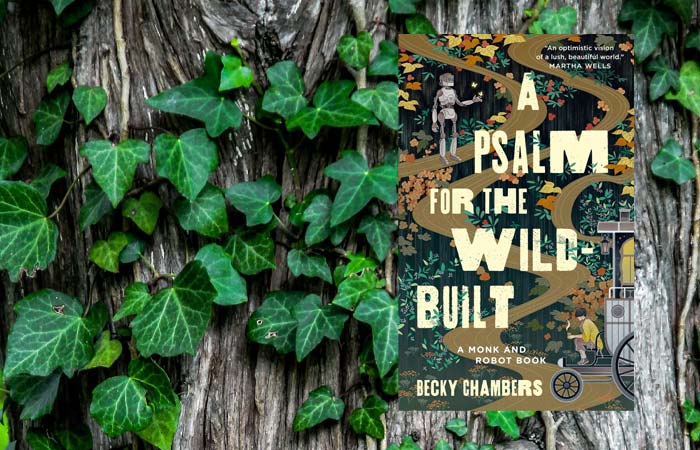
Monk and Robot: Book Review of A Psalm for the Wild-Built
By Robin Beck