
The Artist of
POSSIBILITY
articles
Image
April 15, 2020

Finding Wholeness From Within

Interview with Dr. Shefali Tsabary
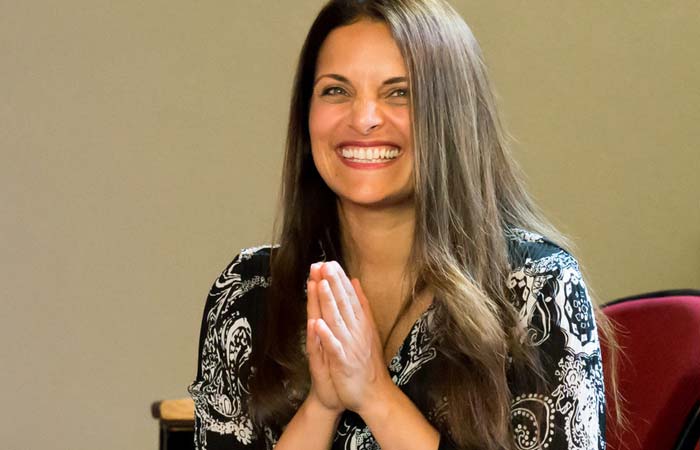
In the following interview, I had the pleasure of speaking with Dr. Shefali Tsabary about her understanding of happiness. Shefali is an acclaimed author, international speaker, clinical psychologist, and wisdom teacher. She is a leading authority on conscious parenting, and specializes in the integration of Eastern philosophy and Western psychology in her work on topics such as: anger, anxiety, purpose, meaning, relationships and conscious health. I am delighted to have had the opportunity to talk with this inspirational and insightful Artist of Possibility.

Phil Moore: Hello Shefali, first of all thank you for speaking with us. We saw your recent YouTube video called Why Your Happiness isn’t Even Yours and it fit in so well with the theme of our issue that we wanted to speak with you in more detail about some of the points you made in the video. To start off, I want to ask, if our happiness isn’t ours, then whose is it?

Dr. Shefali Tsabary: So I think what I mean by happiness is that happiness isn't something that we can purchase or acquire or glean from anything on the outside. It is a decision we make about our state of being and our state of life. It is really a decision, a commitment toward a state of being. And I wouldn't even call that state of being happiness per se because happiness to me is fleeting; it is something that is dependent on something external. What I'm referring to is an inner state of being akin to contentment or joy or really aliveness.

So, I prefer to think of: How alive am I? How present am I? Instead of using the clichéd term happiness. Happiness again to me is something that has become polluted. Something that we think we can acquire, purchase, glean from the external. Therefore, I don't prescribe to this notion of happiness. I really prescribe to a notion of being alive. Am I here? Am I feeling everything I need to feel? Am I deconstructing my belief systems to see whether I am in alignment with nature and my present moment as it should be, not as I project it as needing to be? Becoming conscious is really the ultimate goal I seek. So, it's about being conscious, present, and alive in the present moment.

Phil Moore: How do we end up becoming so committed to someone else’s happiness rather than our own?

Dr. Shefali Tsabary: Well, because we were raised by this dictum of an unconscious culture that states that we need to deserve trust and love. We need to work and earn it from those that were our earliest caregivers. So, we learned early that who it is we are, authentically and organically, simply wasn't deserving of trust, approval, validation and love. We discovered early that we need to develop into someone that was then deserving of those things. We needed to put on a mask and create a persona. This is what I call the false self or the egoic self that is like a shell that we develop in order to not get hurt, to not get rejected. So, it's a false self that we develop as we realize that if I'm that, then I will get the love.

We create this transactional self, a false self that lives on further and further into our lives, and then ultimately suffocates us because it's suffuses out the true self. Therefore, it's this reemerging into our true authentic essence that becomes the quest of the spiritual life. When we realize that we can't make anyone else happy, really, without committing to our authentic selves, that's when we disrupt our old patterns and evolve into our true selves.

Phil Moore: In your YouTube video entitled Do You Really Know Your Definition of Happiness?, you mention that we are socially conditioned to believe that only handful of things can make us happy. Can you speak about what some of those things are?

Dr. Shefali Tsabary: Well, we're conditioned to believe that happiness lies on the outside. We're conditioned to believe that we can purchase, acquire, or glean these things from the external world. This is the conditioning. You see, this are the faulty misbeliefs of the matrix that we have been falsely conditioned to rely on. So, things like beauty, achievement, wealth, belonging, fitting in, peer approval, social status, a career, our labels, our identities, our titles. All of these things are false, but we attach to them and become affixed to them because we've been taught to believe that this will get us to a different state of inner mind.

So, we're all chasing a different state of inner mind and we go down the wrong path. To truly change the inner mind, we need to work on our belief systems and we need to become mindful of how it is we can live in the present moment. But that is never taught to us. So, we're squandering our energies going down the wrong path and picking up the wrong crumbs, which will never lead to true eternal bliss. It'll just keep us down down a rabbit hole of searching and craving things that takes us further and further away from truth.

Phil Moore: You are well known as an expert on parenting, can you tell us about some of the ways that parents condition their children’s relationship to happiness?

Dr. Shefali Tsabary: Well, because parents themselves are unconscious and live externally driven lives, it's quite natural that they inadvertently teach their children to look for happiness on the outside. Because parents themselves are living a misaligned, misguided life so far away from their truths – so unhappy with themselves, so non-accepting of their own bodies, their own minds, their own state of being – they quite naturally teach their children to be discontented as well.

When children learn to look for happiness on the outside, it just becomes a never-ending quest. So, in order for parents to truly teach their children to look on the inside, parents need to embody that wisdom themselves. And it begins with parents accepting their own truth, their own bodies, their own fallibilities, and their own limitations, and then transmitting it to their children. So, even if children get caught up in the external world of say beauty or success or achievement, parents can say, “yeah, that's important in this form-based world, but it's not really who it is you truly are. You know who it is you truly are: someone always beautiful, always full and complete. These things don't make you less complete.” So, teaching children the insidious traps of comparison and competition is how to break free from the conditioning.

Phil Moore: In the video you also mentioned how we are conditioned to seek happiness in the future. Can you say more about how this ensures that we can never feel happy now?

Dr. Shefali Tsabary: Well, just this whole idea of even looking for happiness, of pursuing happiness and liberty, is just so false. It's so wrong because the minute you say you need to be happy, there's an implication that you're not happy. And then it's qualifying and conditioning your life to be happy only when certain criteria are met. This is a sure-fire way to never be happy. The Buddhist teach acceptance of theisness and that's really what I teach. How do you accept this isness no matter what and be Zen with whatever is showing up? And when we become okay with theisness, no matter how it shows up, that's the true bliss. That's eternal joy, because we're not asking for life to be anything other than what it is.

But the minute we qualify life and say that this is good and therefore I feel happy, and this is bad and therefore I'm going to feel sad, we're really creating great suffering for ourselves and it's a huge trap. We have to eliminate these notions of good and bad, and simply begin to accept life as it is. And that is the pathway to eternal bliss.

Phil Moore: Wonderful! Thank you so much Shefali for sharing your insights on this topic. I am sure these will be beneficial and inspiring to many of our readers. In a final few words, what would you suggest for those seeking to cultivate this inner state of happiness on a daily basis?

Dr. Shefali Tsabary: I would suggest that they cultivate a practice of solitude and contemplation, through meditation, which allows for greater communion with oneself.

Interviews

Book Reviews

Essays

Book Excerpts

Featured Artists