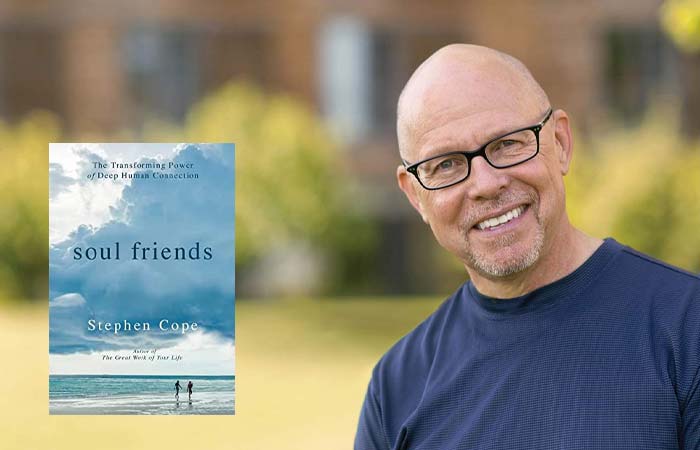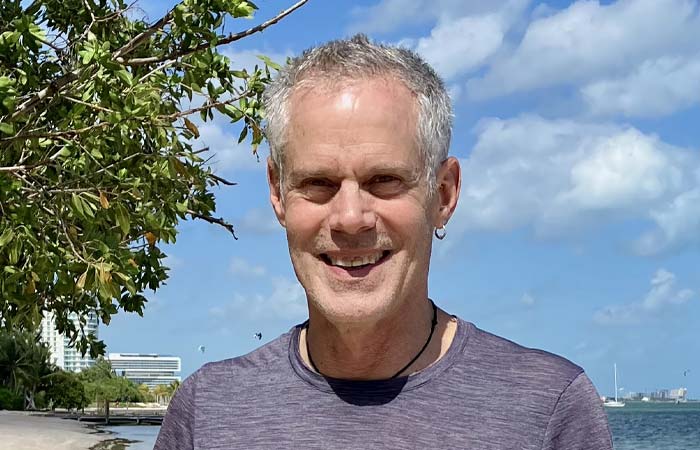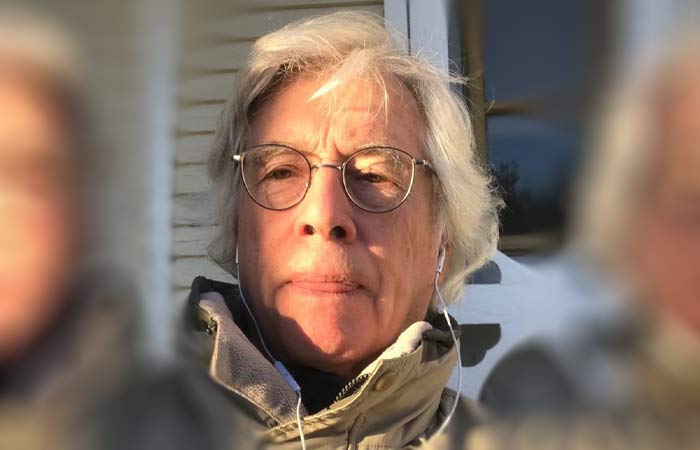

Ariela Cohen: Thank you, Stephen, for being here. It's a pleasure to talk to you. I really did enjoy reading your book and I also listened to a podcast interview of yours on ‘In Search of Wisdom.’ The show title was ,em>The Call for Connection.
Your book and the podcast helped validate the meaningful connections that I've had in my life so far and how they've shaped me and made me the person I am today. And, surprisingly, it also helped me understand a little bit more about why I've been having trouble forming new meaningful and deep connections with people. I’ve come to realize that I have trouble being authentic and vulnerable with people. I’ve been wanting to be seen, but also I’m also terrified of being seen, and so your book really helped me with that.
This leads to my first question: What do you think makes it difficult for people to find meaningful and deep connections in today’s world?
Stephen Cope: That's a great question.
Deep connection, in the way I've described it, is a strange affair of chemistry. We don't know why exactly it is that we feel that chemical connection with someone, although we can sometimes guess in retrospect. One thing I can tell you is that when I feel that chemistry, I am profoundly compelled to follow up and investigate it, and that usually requires another person who's willing to do that.
I'll give you an example. I moved to Albany 13 years ago and I entered a men's group. And the very first night of my men's group there was a guy there. Forty years old, carpenter, broken leg, big cast up to his hip. He was sharing something profound and instantly I knew I wanted to know this person. Today we are best friends and have been for 13 years. He's my best buddy. We talk twice a day on the phone. I'm 73, he's 43. I'm gay, he's straight. There's no way you would've put us together on paper. This is golden and it doesn't happen that often, and I think most people are scared of it. They don’t understand it and they don't know how to follow up.
So, it's absolutely essential to follow up. And, certainly, our connection skills have been diluted by all of the online stuff we do. In this particular case I happened to be in a men's group where it was all about being authentic. And of course, you really can't connect with somebody who isn't. It's the very authenticity that is attractive, right? It's that moment of real aliveness that your radar tunes into.
Ariela Cohen: Absolutely. I can definitely see the essential role of authenticity in building connection, and also how rare deep connections are in one’s lifetime.
My next question is for people who are seeking these rare and deep connections in their lifetime. What would be the necessary foundation for those connections to happen?
Stephen Cope: Well, you used the word foundation and that’s a good one. These kinds of connections must be built, systematically and consciously. It is said that it takes three years to create a deep friendship; at least three years.
My friend and I have been very committed and dedicated to building a container that holds us both in an atmosphere of deep trust. It didn't happen all at once. It took time.
I think in our culture, we're not so used to the idea of actively building something. We think it should be there from the beginning. So it's very likely that for a lot of people, those potential deep connections are already there floating around in their universe somewhere, but they have to be seen and felt and understood, and they have to be pursued and cultivated quite deliberately.
I have another friend who's been in my sphere now for quite a few years and it's only been in the last year that we've begun to really move towards a deep connection. It can be very slow. You have to stick with it. You have to take risks.
When I started my friendship with the man in the men’s group, I suggested we have an agreement that if we feel there's anything off between us that we would call the other one and ask for a friend check-in. And just yesterday he called me and said, Steve, I need a friend check-in. This doesn't happen that often, so I dropped everything to hear him out. And he wanted to know if I'd been pushed away by something he said or did, and we resolved it. But you have to create mechanisms of managing trust. When you're in a deep relationship there's a tremendous amount of vulnerability.
There's a certain amount of merging that takes place in all deep relationships. And in order to merge, even a little bit, you have to be willing to tolerate a certain amount of risk, contingency and discomfort, and it helps to have structures in place. So my friend and I created the friendship check in. We also get together every Tuesday night. We have structures to hold the relationship.
Deep relationships generally don’t happen by accident. They are much more deliberate than most people think. In our culture, we have the sense that emotions – for example, love – should be spontaneous, like a Hallmark card. If it’s not, we think it isn’t real love because real love shouldn’t take effort. But actually, one of the things I've learned from the contemplative traditions is that these salutary emotions like loving-kindness and compassion and sympathetic joy, can be and actually must be cultivated over time. And that's something that we don't have in our culture. We believe that if they don't just flow out naturally, they're not real, but it's not true.
Ariela Cohen: I also believe that our relationships need to be cultivated in a safe container in order for the relationship and the people in it to keep evolving.
Stephen Cope: Evolving. That's right.
I strongly believe that most development in life does happen in the context of these deep relationships. And so, if there are aspects of the self that are in infancy and longing to be developed, your radar goes off when you come across a person that can help you develop those.
And that's what happened with my friend and I. I'm a little bit up in my head and he’s very much in his body with his feet on the ground as a carpenter. I knew I needed that. And he also knew he needed something that I had that he didn’t.
Very often, the leading edge of what will become a deep connection starts with fascination. When you experience that fascination in someone out there, it's always ultimately about something in you and you have to go toward it. I often tell the story of how, for years, I've been fascinated by Queen Elizabeth II and I followed her on YouTube, watching videos about her almost every day until she died. And I didn't understand why.
It took me years to understand that my mother and Queen Elizabeth II looked almost identical in old age, and that my mother was very magisterial and queen-like. And it wasn't until the last couple of years that I understood that this fascination was about me. It was me trying to connect with a part of myself that I didn't understand or that had been split off.
There's a lot of great literature about this. Have you read A Room with a View by E.M. Forster? That;s one of many great novels with similar themes about an English person that goes to Italy and discovers a lover or who lights them up and who they're fascinated with because they're so different.
But what’s actually going on is that the more reserved English person is trying to warm up his inner world. Forster was the English person, and he went to the warmer climates to find the missing parts of himself.
So, the question is, what fascinates you? What draws you?
When you find it, go toward it. It may seem counterintuitive, but ask yourself, what is that? And then find out.
Interviews

From False Identity to Divine Truth
An interview with Sadhvi Bhagawati Saraswati
Living Transmission: The Full Spectrum of Vedantic Awakening
An interview with Acharya Shunya
Let Your Awakening Be a Force for Change
An interview with Jac O’Keeffe
Thinking the Impossible: New Myths for a Future Consciousness
An interview with Dr. Jeffrey Kripal
Mapping the Noosphere: Science, Mysticism, and the Geometry of Consciousness
An Interview with Shelli Renée JoyeBook Reviews

A Summary of the Fetzer Institute’s Sharing Spiritual Heritage Report: An review by Ariela Cohen and Robin Beck
By Ariela Cohen

Choosing Earth, Choosing Us: A book review of Choosing Earth
By Robin Beck
Monk and Robot: A book review
By Robin Beck
No Pallatives. No Promises: Radical acceptance as one woman's path to living with grief
By Amy Edelstein