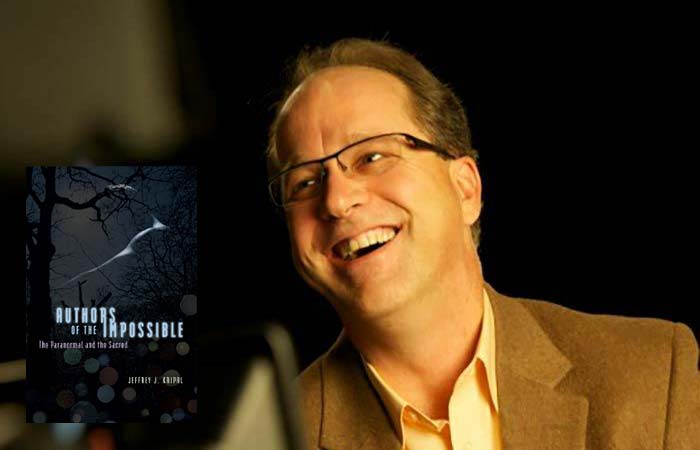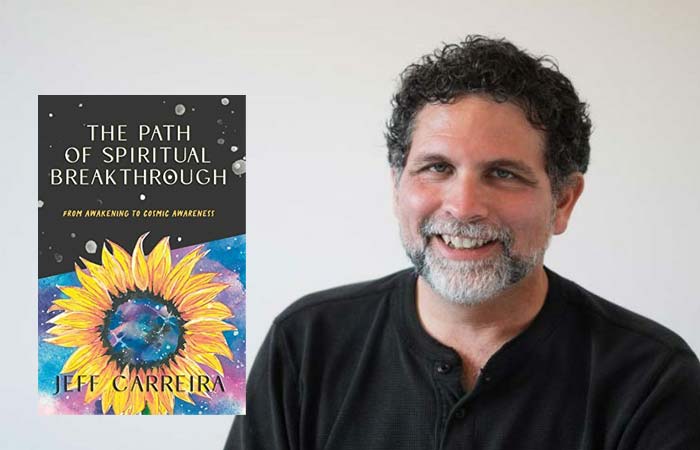

Jeff Carreira: One of the things that we are exploring in this issue is the phenomenon of the paranormal and I want to start this conversation with you by speaking about the cultural movement of Spiritualism that emerged in the late nineteenth century. One of the perspectives that I have gained from reading your books is that Spiritualism exploded in popularity at a time when the sciences were establishing themselves as the arbiters of truth in the modern world. In your book Authors of the Impossible, you explore a number of scientifically informed individuals such as Frederic Myers and Charles Fort who rigorously researched the kind of paranormal experiences that were so popular among spiritualists. These people were trying to validate the reality of these experiences but, in the end, those types of inexplicable occurrences were marginalized until they were no longer considered worthy of true scientific study. What I wondered about when reading your book is how much more common those experiences might have become if they had not been banished to the fringes of culture.
Jeffrey Kripal: Currently, I'm reading Charles Taylor's book, A Secular Age. It is a long book, but it essentially asks one question. Why was it virtually impossible not to believe in God in the year 1500 and now, only five hundred years later, it's virtually impossible to believe in God. What happened? One of the things he argues is that modernity has conditioned us to be closed to the inexplicable. We have become less porous, less open to the unusual and the strange. We became buffered against these things. We have developed thicker skins that protect us from the magical or the mystical aspects of the human experience. There were payoffs to this development, for sure. We gained a lot, but we also lost a lot. What I want people to understand is that our cultural norms, institutional policies, and disciplinary practices are not just influencing the way we think. They actually change the reality we live in. We have buffered ourselves, talked and written our way into a perceptual box. I believe that it is possible to change the way we talk and write and open ourselves up again.
Jeff Carreira: What I find so exciting about your work is your conviction around how our articulation or reality actually creates reality. Our articulations are not just descriptive. The act of articulating is a creative act, not just in terms of the words we speak or write, but in the creation of reality. I've always been very intrigued by the famous phrase, ‘’the suspension of disbelief’’, that was used by Samuel Taylor Coleridge. A hundred years before the Spiritualist movement, Coleridge was afraid that in the coming scientific age, we were going to lose the ability to suspend disbelief and be open to the unusual and the magical. When I read your book, I realized that Coleridge was right. I think we have largely lost our capacity to be open. It occurred to me that the strong distinction that we make between fact and fiction didn’t exist the same way a few hundred years ago. Myths, which we clearly see as fiction today, were taken seriously. I believe that, at one time, the line between fact and fiction was more porous and fluid. And I wonder how we could regain that greater creative imagination.
Jeffrey Kripal: That's sort of how I think about religion. A religion is essentially a set of stories that people tell themselves, act out in rituals, build buildings to re-enact or perform those stories, and create art to depict, until they are actually living inside the stories. The stories shape the reality of those that believe in them. I think the misfortune of fundamentalism is that it reduces religion to a set of doctrinal beliefs and literal truth claims, when I think historically it was much more like a true living novel. I saw this so powerfully when I visited Assisi. Did you know that the spiritual life of Saint Francis of Assisi begins with a talking crucifix? He was in a church praying to a Byzantine crucifix, and it came to life and told him to rebuild his church. Francis interpreted that experience literally and so he literally rebuilt the little church with the painted crucifix in it. He goes on to embody the art he had seen. When you go to Assisi today, it is filled with gorgeous art about the life of Francis. So you have this amazing cycle that begins with a talking painting and ends with a basilica filled with beautiful paintings, all about a life that is a kind of an imitation of the story that was seen in the original painting. It took centuries to create the living fiction that is Saint Francis, but seeing it embodied in the church of Assisi made me realize how impoverished we are today with respect to that same creative power. Our culture puts relatively little creative energy into our spiritual life in comparison to our forms of entertainment.
Jeff Carreira: Yes, and in terms of Coleridge’s fear of losing the capacity to suspend disbelief, we have ended up in a place where literature is often seen as a form of entertainment. In your work, I see how literature can be so much more than entertaining stories. You describe how reality works like a story and, as we write new stories, we write our way into new realities. We live inside of stories, and we can author new stories to live in. The act of articulation doesn’t just change our perception of reality, it changes the actuality of it. And beyond this, you also imply that we are not the sole authors of our stories. Our stories, or at least some of them, are not just made up by us, they are actually being given to us by higher dimensional beings, or perhaps higher aspects of our own being. You imply that new possibilities are actually writing their way into existence through us and our creative articulations. I was so excited reading your book because it seems that how you describe this co-creative process offers the modern mind a way to embrace the mystical impulse. If we could take the leap into higher order creativity, we may discover a source of wisdom and intelligence larger than ours that exists somewhere in the universe, or somewhere in consciousness. We might realize that this higher power is working its way into existence through us. This part of your book thrilled me.
Jeffrey Kripal: I think you've captured the essence of what I was getting at. I've never met a writer, a truly profound writer, who thinks that when he or she is writing, that the author is in control of what emerges. Real writing is a form of channeling. It's a mild trance state that you enter, and you open to something that wants to be expressed through you. It might be coming from somewhere inside you, but it's not you. It's not the ego or the personality. It's something much wiser coming through you. And you don't need to be a writer to know that. Anybody who's ever remembered a dream has experienced a story that was being told to them, not by them. This is our humanity. It’s not a metaphysical doctrine. This is a fact of the human experience. We're always being written by stories that are told to us. We experience this every night in our dreams. And we have thoughts and fantasies in our daily life that we didn't author. Freud called that the unconscious, but that term is too limited. I am sure that the stories that are living us are sometimes coming from somewhere much deeper and broader than a personal and biological unconscious.
Interviews

From False Identity to Divine Truth
An interview with Sadhvi Bhagawati Saraswati
Living Transmission: The Full Spectrum of Vedantic Awakening
An interview with Acharya Shunya
Let Your Awakening Be a Force for Change
An interview with Jac O’Keeffe
Thinking the Impossible: New Myths for a Future Consciousness
An interview with Dr. Jeffrey Kripal
Mapping the Noosphere: Science, Mysticism, and the Geometry of Consciousness
An Interview with Shelli Renée JoyeBook Reviews

A Summary of the Fetzer Institute’s Sharing Spiritual Heritage Report: An review by Ariela Cohen and Robin Beck
By Ariela Cohen

Choosing Earth, Choosing Us: A book review of Choosing Earth
By Robin Beck
Monk and Robot: A book review
By Robin Beck
No Pallatives. No Promises: Radical acceptance as one woman's path to living with grief
By Amy Edelstein