
The Artist of
POSSIBILITY
Magazine
Image
October 15, 2020

Artists of Possibility Among Us

An interview with Eliza Robertson
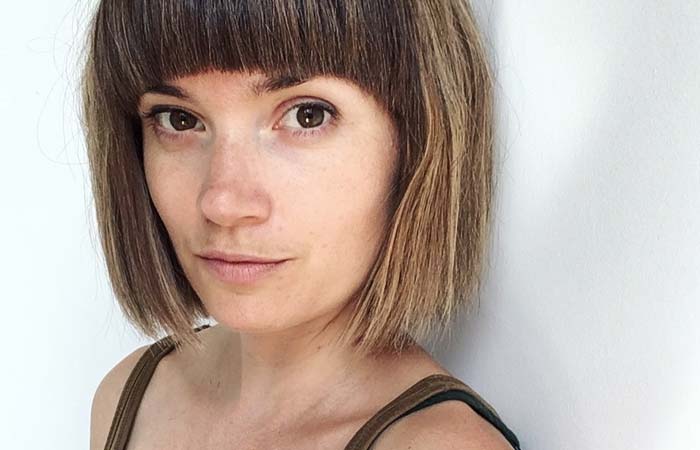
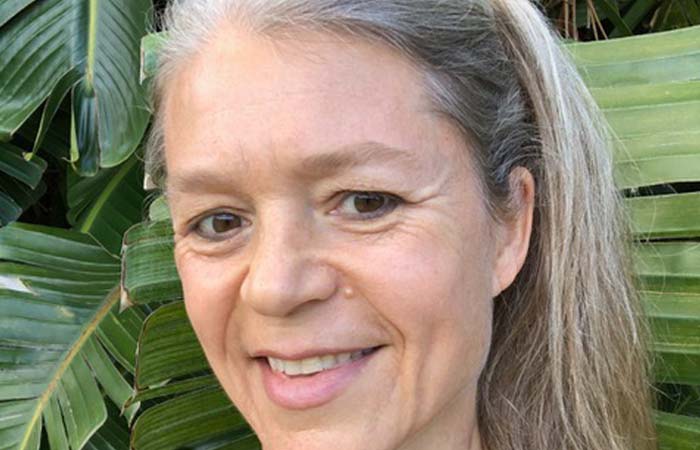
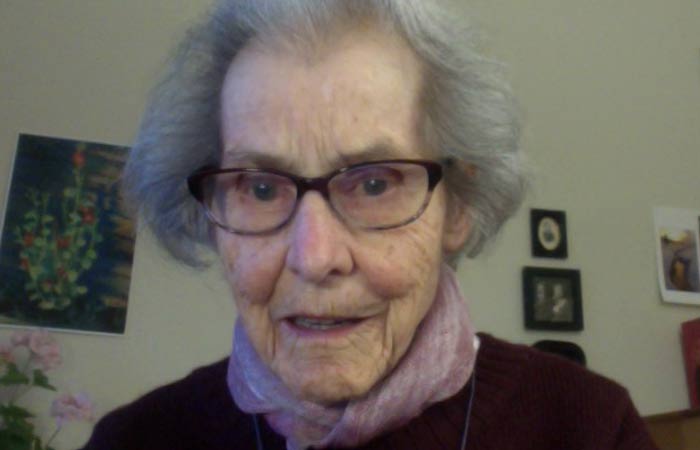
For this issue, I had the pleasure of talking with award-winning author, Eliza Robertson, Ph.D. Eliza is originally from Vancouver, and now lives in Montreal which is where I got the opportunity to meet her, thanks to a dance class we were taking together. Eliza has won several awards and titles for her writings. For example, her critically acclaimed first novel, Demi-Gods, was a Globe & Mail and National Post book of the year and the winner of the 2018 QWF Paragraphe Hugh MacLennan Prize. She is also a pretty badass astrologer, if you ask me, having had the opportunity to receive a reading from her a few years back. She studied at the Faculty of Astrology in London, as well as with Chris Brennan on his Hellenistic Astrology course. Moreover, along with two of her peers, Eliza has an astrology podcast called Kosmic Tonic.

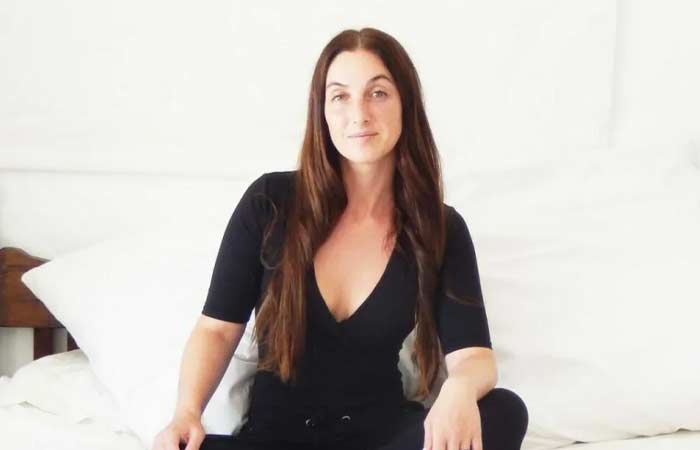
Ariela Cohen: Hello Eliza, thank you so much for being here today. I am excited to introduce you to our readers, so let's jump right in. Based on some of your online material, you describe yourself as having two lives: One as an author and one as an astrologer. And, in this issue of our spiritual magazine, we're discussing the transformative pow er of fiction. So, I thought that the combination of your two lives would be perfect for this issue! Maybe we could start by just giving you the chance to introduce yourself to our readers.

Eliza Robertson: So, I'm someone who has made most of my important decisions almost overnight. It really is an intuitive process, even though I don't always think of it that way. Well, I thought for a long time that I wanted to be a lawyer actually, from the age of 11. I chose a high school based on the fact that it had a law career preparation program. That's why I took political science in my undergraduate years at the University of Victoria. And then, one day, in 2008, I just thought, you know, I'm going to try a creative writing class. I literally walked across campus one day and changed my major to Fine Arts, and then started taking writing classes. But it wasn't an immediate success. My first two terms of writing were a bit of a shock to my ego. However, I learned a lot, and by the end of that year, I was utterly enchanted and consumed by it. And then there was no turning back. I just kept going down that road; I never applied to law school and went to writing school instead.

Ariela Cohen: What enchanted you about writing?

Eliza Robertson: It was very much the writing process. I remember feeling like it was an act of magic. I've always been mystically inclined. I didn't have any solid practices at that point, but I remember feeling that there was something miraculous in the writing process, in that it didn't seem to be totally coming from me when I was writing my first stories. I actually feared losing it at that time. I remember doing this ritual on New Year?s Eve, inviting the ideas to keep coming, for fear that it was a fluke and that I wouldn't be able to keep doing it. I was trying to engage with something beyond and asking them not to abandon me. Magical subject matter has also been included in my stories as well. I've always been inclined to write about transformative human experiences such as grief and loss. That's been a major theme in my writing, but the way I've conveyed that has been through magic in some way, or some kind of enchanted reality. That was a theme in my very first stories. I remember writing about a young girl who was homeless and I remember the image of having a white feathered peacock wandering through Montreal. For some reason, this was the image that I had. I guess, what I'm saying is, magic has crept into the content but it also was a part of my relationship to the process itself early on.

Ariela Cohen: Is magic still part of the process now?

Eliza Robertson: Definitely. And maybe it's actually come full circle now that I think about it; astrologically speaking. Since it's been 12 years that I started writing, and twelve years is a Jupiter cycle ? which means that the planet Jupiter, now, is located where it was then. And Jupiter is known as a gift- giving planet? But to answer your question: Yeah, I would say absolutely. As I pursued my studies as a graduate, writing became more analytical, more scholarly, and I became more jaded. I have always been very ambitious and perfectionistic, aiming to achieve highly, and I can be very hard on myself. So, I would always compare myself to peers and that became toxic.I n terms of my relationship with writing, it darkened and became worldly ? that was during my time in England. I would say that moving to Montreal has in some ways changed that. I stepped back from social media, and found again some of that contentment with my writing. It helps that not all of my friends are writers. Not everyone I know has a book, and I don't doubt that helps.

Ariela Cohen: Do you feel like astrology has also helped you bring some of that enchantment back in your writings?

Eliza Robertson: Yeah, absolutely. And I will answer this in mundane terms as well as in more magical terms, because I think they both relate. So, Montreal was another one of those overnight decisions. I came very close to going into academia in England. And then I decided, I'm just going to have a go at being a writer in Montreal and also being an astrologer. And, I actually think that this commitment and implicit faith in that decision has, on some ethereal level, helped or allowed things to come into my life that otherwise wouldn't have had the opportunity. So, with regards to my interest in astrology, I've always been mystically inclined, as I said. I was reading tarot cards from a young age. I used to look for ghosts with my cousin as a kid. I also grew up in the 90s, during a time when ?witchiness? was really cool. But it was in my 20s that I decided to study astrology more seriously. As for my magical relationship with writing and astrology? I have a statue of Hermes, the Greek God associated with Mercury, a planet linked with writing. So, I will work with the statue to invoke Mercury or engage with that planetary energy in a mindful way when embarking on a writing project.

Ariela Cohen: Has astrology influenced your writing?

Eliza Robertson: I'm sure it has. I would say it's influenced the subject matter at the beginning. When I first started studying, I wrote a story that I called Autobiography that was based on my birth chart, although, when I read back over it now, there was a lot about astrology I did not know. Now, astrology feels like a second language that I speak without meaning to. So, it influences my writing on a more implicit level. I really do consider any creative act and funneling it down, any creative writing to be a magical process. It's a form of enchantment and fascination and charm to be moved by language and to be the author of that language. It is a form of charming the reader. So, I think you can really view it in that capacity. And I do. I try to. Well, it makes it more interesting for me.

Ariela Cohen: Yeah. And, in line with our definition of what is an Artist of Possibility – a person who is able to reach into potentials and possibilities that don't exist yet, and to use a creative medium to communicate those potentials – do you believe that there's something that can be conveyed through writing that's in line with new possibilities, new potentials? And how does that affect both the writer and the reader?

Eliza Robertson: Yeah, absolutely. So, I would say it's a charm for the author in so much as they are orchestrating or conducting that charm, and they might be charmed as well. But the object is, in some ways, to charm the reader or to affect them. I'll give you an example. I am teaching a writing class right now, for business students, at McGill University. We were reading an article that was discussing police brutality in neighborhoods in Brooklyn. And the author would use the word unhoused instead of ?homeless? when he was referring to homeless people. And that's a really subtle rhetorical gesture because when you use the word unhoused, there is an implicit link to the question: By whom?? It doesn't put the onus of being homeless on the individual without a home. It implies at least another person for someone to unhouse someone else. So, it's very subtle, and a reader may only pick up on it on subliminal levels, but it's a way of removing responsibility from the person without a home and putting that responsibility on the system, saying, actually, it's our job to take care of the mess. You could call this rhetoric. You could also call it a charm of a sorts. He's crafting language in a very particular way to suggest something without saying it directly.

Ariela Cohen: Yes. I love that. The author is using a charm or a spell because that one word allows us to filter things completely differently. And like you said, probably in very subtle ways. So, what do you see as the transformative power of the stories that you write?

Eliza Robertson: My main writerly preoccupation has been with grief processes. I have mobilized or metabolized my own grief through the act of writing, as well as my own anger and my own sadness when it comes to loss and other topics. I've worked those out and worked through those through writing. But I would say you can showcase that process happening with your characters. For example, how is the character responding to the loss? I think that's the main common thread of my story collection, Wallflowers. Every one of those characters is alone for some reason, either of their own volition or they've lost somebody. How are they able to navigate that solitude? Those themes are in my novel too, to some extent. I am also currently writing a non- fiction account of someone who was murdered. There's something about writing a book about a person that makes them endure beyond their lifetime, and beyond the lifetimes of those who loved her. There's an important contribution to the collective consciousness, in the publishing of a book, that is lasting. It is almost talismanic in a way. Like you're carving something into you, into stone, into a mirror in the world. I also think books can be really wonderful companions. So, I aim to have my reader feel a little less alone; to have the book serve as a companion of sorts. Maybe a strange companion, as I'm not known for writing really easy or straightforward books. My books have been described as weird. They've been described as dark on occasion. But I think they could still be companionable.

Ariela Cohen: Yes, that?s also part of the magic of books, the way they keep us company. So, we talked about your life as an author, but you are also an astrologer. W hat do you see as the purpose of your astrological work?

Eliza Robertson: There are many answers to this question. So, I would say one of the major services I can offer, through my consultations, is helping someone. To help them remember their own enchantment. To see the planetary archetypes that are alive in them, and in their chart, as guides or Earth influences. In many ways, it is about creating stories that lead people out, that empower people, and help them make sense of things. We all go through dark moments and have moments that are incredibly trying. But what's going on astrologically? It can help to know, and to also know that there is an endpoint. I can see what's going on here astrologically and I can see when a lot of the energy will pass. That can be very soothing. It can create a sense of meaning, too, like a feeling or trust. OK, I'm going through this for a reason, and it will end. So that's a major part of my practice. Equipping someone with more myth; reimagining how they view their own lives and making more sense of their difficulties. But I can also offer very simple strategies that have a lot to do with timing. I do electional astrology, which means I elect times and dates to begin ventures. So, if you're a dancer and you want to submit a grant application to put on a show, we could figure out when would be the most auspicious time to hit submit. Or if you want to have a really delicate conversation with your partner, maybe you don't choose the time when Mars retrograde is in the 7th house(laughs). It?s about finding the best possible moment to do something. So, it can have a very practical use as well as the more numinous. And personally, astrology has definitely brought me greater self- understanding and self- awareness. At an earlier time in my life, it gave me a language to express my needs and to express what I was feeling, as I had a lot of difficulty even identifying my emotions before the age of 30. So, getting to really know my own birth chart for a number of years gave me more of a language, more of an understanding about myself. And now I would say I don't necessarily need the astrology as much to express those things. It still helps. It's something I always have in my back pocket.

Ariela Cohen: It's wonderful to hear all the ways that astrology has transformed both you, and the clients who consult you. I would like to finish with one last question. You mentioned that when you started writing, it felt like something was coming through you. Is that something that you still experience as you write?

Eliza Robertson: Yeah. Definitely. Not always. At times. There's a lot of drudgery involved with writing a book- length manuscript. But certainly, there are times where my head or my hands feel guided in some way, or I'm not conscious of what I'm writing. It's just written. It's a process that happens. It feels like a sinking in. Like you're in a meditative state. It's trance- like. I actually can't write with someone else in the room because I realize I can't descend deep enough. And, if I am in that trance- like state of writing and someone interrupts me, it's like being jolted out of sleep. And also, I definitely still commune with the planets. I remember, at the end of 2018, I climbed the Hill of the Muses in Athens; that's where I bought my Hermes figure. I did a sort of self- created ritual at the top of the Hill of the Muses and left them offerings. I also wrote a poem that day, which is not typical for me. I don't tend to write poetry, that's not my genre.

Ariela Cohen: And how do you explain that trance-like state? Do you feel like it comes from the stars or the planets?

Eliza Robertson: I don't think the stars are necessarily speaking through me, but there is maybe a sense of intimacy with these higher intelligences. So rather than it coming from them, to me, it's more like we're in tune.

Interviews

Book Reviews

Essays

Book Excerpts

Featured Artists