
• About
  • Contact

Account
Account
Emergence Education LogoEmergence Education Logo
  • Books
  • Programs
  • Wisdom Cards
  • The Artist of PossibilityMagazine
  • Luminaries
  • One-on-One Sessions
  • Blog
Menu
Membership
Browse Articles
| Browse Issues
| Listen to Podcast
The Artist of
POSSIBILITY
Magazine
Image
  • Interview
    |
  • Issue 11: Alternative Spirituality and Religious Adaptation
    /
July 15, 2022

Alternative Spirituality at the Harvard Divinity School

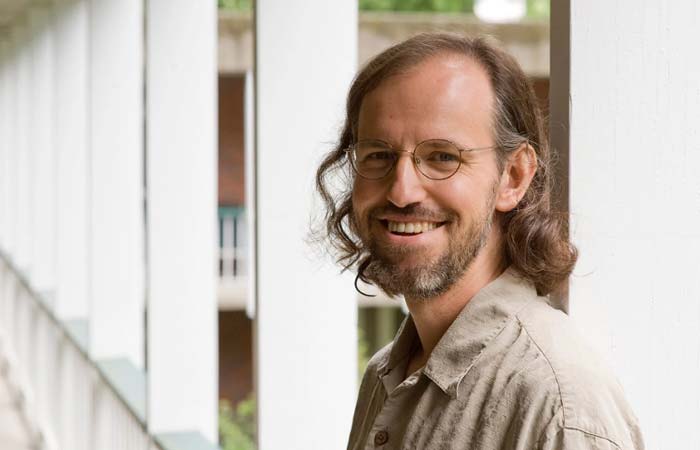
An interview with Dan McKanan

By Jeff Carreira

In this interview we spoke with Dan McKanan who serves as the Ralph Waldo Emerson Unitarian Universalist Senior Lecturer at Harvard Divinity School and is the author of six books, among them Camphill and the Future: Spirituality and Disability in an Evolving Communal Movement (University of California Press, 2020), Eco-Alchemy: Anthroposophy and the History and Future of Environmentalism (University of California Press, 2017) and Prophetic Encounters: Religion and the American Radical Tradition (Beacon Press, 2011), which won the Frederic G. Melcher Book Award. Dan is the head of The Program for the Evolution of Spirituality and we spoke with Dan about the goals of the program and the cultural phenomenon of the growing number and diversity of alternative spiritual movements.

Jeff Carreira: Dan thank you for speaking with me for this issue devoted to alternative spirituality and religious adaptation. You are leading a program called The Program for the Evolution of Spirituality at Harvard University, and I know that this is an area of professional and personal interest of yours. We met a few years ago and I had the chance to speak with you about your work and also meet some of the graduate students that work with you at the Harvard Divinity School. What I learned then was that the students came from a very broad range of spiritual traditions. Could you begin by telling us a little about your perspective on the cultural shift that has allowed such a wide range of spiritual paths to be considered legitimate for academic study?

Dan McKanan: I think this is one of the most important ways in which spirituality is evolving right now because more and more people feel that they cannot be spiritually authentic without being connected to multiple traditions. Perhaps they are connected to a tradition they were raised in, but also have been transformed by another tradition at a crucial moment in their life, or have been inspired by an exemplary spiritual leader that they encountered.

The Harvard Divinity School is unique among university-based divinity schools because of the extent to which we have embraced a multi-religious identity. Back in the 1950s, Harvard received a major donation that began a consistent focus on the study of world religions at the Divinity School, which historically had been primarily a center for preparing Unitarian Universalists and Protestant ministers.

Twenty-five years ago, we had many scholars actively studying a broad spectrum of traditions, but we decided at that time to make a concerted effort to go a step beyond that and commit to training people to be both scholars and leaders connected to all the traditions of the world. At the time, it was generally assumed that we would be preparing students for leadership in a Christian, Jewish, Muslim, Hindu, and Buddhist context.

That did happen to some extent, but what we didn't expect was the enormous number of people whose path of ministry didn’t fit within any of the major world religions. Today, we have people who are yoga teachers but not Hindus, and who see their ministry as teaching yoga, wanting to offer a deep connection to a body-based spirituality without necessarily wanting to be connected to the larger theology of Hinduism. We have other students who are herbalists; they see plants as spiritual persons eager to be in cooperative relationship with human beings and want to develop that as their ministry. We have many students who identify queer spirituality as their primary spiritual path and draw on the legacies of Two-Spirit people within indigenous communities and other sources. We also have students who were raised in various new religious movements that might have been centered on sources like The Urantia Book, or A Course in Miracles.

Jeff Carreira: Can you speak personally for a moment about your own interest in alternative spirituality.

Dan McKanan: My personal path into alternative spirituality came largely through a personal and intellectual interest in one particular form of alternative spirituality, the anthroposophical movement that was initiated by Rudolf Steiner early in the 20th century.

Steiner had been the head of the Theosophical Society in Germany, a spiritual movement that drew on deep currents of Western esoteric practice, but also took a lot of inspiration from the wisdom of the east, both Hindu and Buddhist. As a theosophical leader, Steiner was interested in applying spiritual insights to practical problems. He had many followers who were interested in education and so he gave a spiritual course on education and out of that grew the Waldorf school movement. He had followers who were farmers and he offered a course on spiritual agriculture and that became the basis of biodynamic agriculture, which was the first organized strand of organic agriculture. Steiner had personal experiences as an educator working with young people with intellectual disabilities and he offered a course on what he called curative education, that led to a whole anthroposophical tradition of engagement and support for people with disabilities.

This is why I got interested in anthroposophy, not because I was particularly interested in esoteric spirituality as such, but because I was interested in organic agriculture and intentional community and as I looked around for those things, I kept bumping up against anthroposophical initiatives.

Most especially the Camphill Movement, which is an international network of intentional communities that draws on many different aspects of Steiner's work to support either children or adults with intellectual disabilities. I came to be curious about why people who read books with titles like How to Know Higher Worlds, were also so deeply committed to caring for the people and ecology of this world.

I decided I could play a role as a scholar of anthroposophy. I'm one of the few people who has written extensively about anthroposophy who is not personally a part of the movement. I take a role as a sympathetic outsider trying to speak about anthroposophy in ways that make sense to other people like me. When I came to Harvard, I started teaching courses more broadly on alternative spirituality.

Jeff Carreira: When we had originally met, it was to discuss the possibility of using some funds that I had the responsibility of distributing for the creation of a program that would involve yearly conferences and address the potential and challenge of alternative spirituality. Those discussions led to The Program for the Evolution of Spirituality. The context for the program was to address the accelerating growth of alternative spiritual movements. There have always been alternative forms of spirituality, and in fact every major tradition was probably at one time an alternative form of spirituality. And yet it seems to me that as long as we treat them as if they only exist on the outer fringes of society, they will never receive any serious academic attention. In that case, they will alway operate in something like the wild west of spirituality. And so, what inspired me in our first conversations was the idea of creating a program in a major academic institution that was devoted to studying the emergence of alternative spiritualities as well as how the world’s great traditions were evolving and adapting to the times. I wonder if you could tell us a little about the program you started at Harvard.

Dan McKanan: The Program for the Evolution of Spirituality is really trying to create a new kind of space and a new kind of conversation about alternative spirituality within the academy. There are people who try to study religion and spirituality from a position of scholarly neutrality. Others take a theological approach engaging in critical academic study that is rooted in their personal religious or spiritual commitments.

We're trying to create a space for a theological approach where practitioners of alternative spirituality can bring their full selves into academic conversations, where they will be challenged to wrestle with difficult questions in the interest of deepening their practice and commitments.

Jeff Carreira: That’s interesting because I think there have been spaces where alternative spirituality could be explored from the outside, especially by people who aren't practicing and are generally critical. But this sounds like a space for objective exploration from sympathetic practitioners. One of the things that excited me after connecting with you was the idea of being able to connect with other deep practitioners from alternative spiritual circles and have conversations with sincere and deep adherents of other spiritual disciplines. This is very interesting to me because alternative spiritualities tend to be worlds into themselves that don't always translate well to the world outside. So these traditions tend to develop willy-nilly on their own without the benefit of external opportunities for objective reflection.

Dan McKanan: Yes, absolutely. I think people who are deep practitioners of small spiritualities, and especially people who are leaders of small spiritual organizations, desperately need that dialogue with deep practitioners and leaders from other spiritual organizations. And this is all done for the sake of attaining greater and greater spiritual depth as well as creating a space for giving attention to ethical issues.

If something happens in your own denomination that is a little unsettling, you will have someone or some group to talk to who is sympathetic in a general way to the life you are living. This sympathetic outside perspective can be enormously valuable in figuring out what's going on in your own organizational structure. And, as you said, because a lot of alternative spirituality sees itself as worlds unto themselves, they don't know who their conversation partners are.

Even more challenging is the situation of someone who is in the top leadership position of a very small organization. If the only people they interact with are people who are to some extent their disciples, they're subject to enormous temptation for misconduct. And even if they work hard not to perpetrate abuse, they're probably going to feel very lonely and isolated and finding true spiritual peers is so important.

Jeff Carreira: I find that interesting because I run a small spiritual organization and I try to cultivate a diverse structure of leadership where the teaching function is spread among a number of members and not solely concentrated on me. After working at this for a few years, I now consider myself to have many peers among the people in my community.

Communities always include diversity, and even though people gather generally around certain broad convictions, there are still differences in belief and experience that exist and need to be respected and accommodated. Many people benefit a great deal from working with me and some of them are teachers, or developing to be teachers in their own right, and offer their unique expertise to the community. In some ways, I see it as a multi-traditional emergence. I am very grateful that many people want to work with what I teach, but I know the community is bigger than me and I like that. I am still the primary space holder you could say, but part of what I want to hold is the space for the other teachers.

Many of the members in the community have as many decades of intense spiritual practice and experience as I have. And so, spiritually, I feel I have peers, but I don't have many people I can talk to about that other dimension of leadership and responsibility for shaping the organization. I certainly benefit from ideas and opinions that others share with me, but no one else is holding the responsibility for keeping things working. In this way, I have occasionally found conversations with others who are running other organizations very helpful and I would welcome more of those.

On another note, I know that the next theme for The Program for the Evolution of Spirituality will address the potential for abuse of spiritual authority, and I know how important a topic that is. At the same time, I think it is important not only to guard against the dangers of spiritual authority but also to include discussion about the positive uses of spiritual authority. The authority that people bless a spiritual leader with is a precious commodity that can be used to generate tremendous good for others. It is often squandered, but still I see tremendous potential in the positive use of the goodwill that is extended to many spiritual leaders. I'm curious to hear you talk about this in relation to the program’s focus for the upcoming year.

Dan McKanan: I'll start by thanking you for something you did really clearly in the conversations we had that led to the creation of the Program for the Evolution of Spirituality, which is that you were very honest that the people who had been involved in your previous organization held a wide variety of opinions about it after the fact. Some had really treasured their experience in that community and wanted to see that same spiritual richness going forward in the world. Others felt deeply harmed and felt that reparations for damages were necessary.

That prompted me to ask myself how we could make sure that our programming would be accountable to both of those groups of people. So our next conference in the spring of 2023 will focus on the theme of uses and abuses of power in alternative spiritualities.

We’re eager for papers about the positive uses of power and also eager for papers and workshops that illuminate the ways in which spiritual power goes awry. We anticipate receiving case studies that show how abuses can emerge within spiritual organizations and that propose ways to safeguard communities against them.

We want to ask some deep questions about spiritual practices like guru discipleship. I know many people find that relationship extremely valuable and we know that others think it’s inherently abusive. We'd like to see some real and open conversations about some of the practices within communities and the demands placed on community members.

And one piece of language that we're including in our call for papers is especially important in light of this. We especially welcome proposals designed to foster open-hearted dialogue between people who've benefited from alternative spiritualities and those who've experienced significant harm from them.

There are so many places in the academy, and beyond the academy, where these two different groups of people – those who experienced benefit and those who experienced harm – have their own separate conversations and don't talk to one another. If anyone has found a path to really bring these two groups together in conversation, we really want to hear from them.

The truth of the matter is that the vast majority of spiritual organizations are somewhere in the middle. They have the potential to empower people and the potential to disempower them and the choices they make today will determine how much members experience empowerment and how much they are disempowered. We really want to create programming that is helpful to practitioners in those middle spaces.

Jeff Carreira: I, for one, am very happy with how this program is being shaped. Could you let us know how people can contact the program if they want to be involved or submit a paper?

Dan McKanan: The best way is to go to our website or just do a Google search for Harvard Program for The Evolution of Spirituality. Anyone can sign up to be on our mailing list and get our regular newsletters. We will be releasing our call for papers by the end of the summer and we will also be announcing the formation of a handful of monthly Zoom-based conversation groups that people can join.

Interviews

Featured image for “From False Identity to Divine Truth”

From False Identity to Divine Truth

An interview with Sadhvi Bhagawati Saraswati
Featured image for “Living Transmission: The Full Spectrum of Vedantic Awakening”

Living Transmission: The Full Spectrum of Vedantic Awakening

An interview with Acharya Shunya
Featured image for “Let Your Awakening Be a Force for Change”

Let Your Awakening Be a Force for Change

An interview with Jac O’Keeffe
Featured image for “Thinking the Impossible: New Myths for a Future Consciousness”

Thinking the Impossible: New Myths for a Future Consciousness

An interview with Dr. Jeffrey Kripal
Featured image for “Mapping the Noosphere: Science, Mysticism, and the Geometry of Consciousness”

Mapping the Noosphere: Science, Mysticism, and the Geometry of Consciousness

An Interview with Shelli Renée Joye
Browse All

Book Reviews

Featured image for “A Summary of the Fetzer Institute’s Sharing Spiritual Heritage Report”

A Summary of the Fetzer Institute’s Sharing Spiritual Heritage Report: An review by Ariela Cohen and Robin Beck

By Ariela Cohen

Featured image for “Choosing Earth, Choosing Us”

Choosing Earth, Choosing Us: A book review of Choosing Earth

By Robin Beck
Featured image for “Monk and Robot”

Monk and Robot: A book review

By Robin Beck
Featured image for “No Pallatives. No Promises”

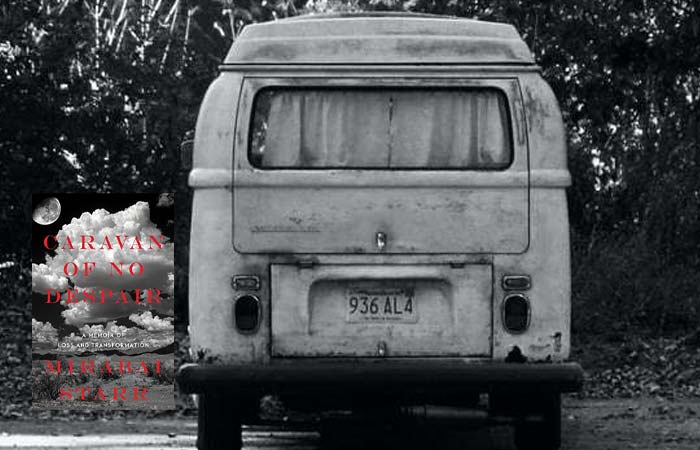
No Pallatives. No Promises: Radical acceptance as one woman's path to living with grief

By Amy Edelstein
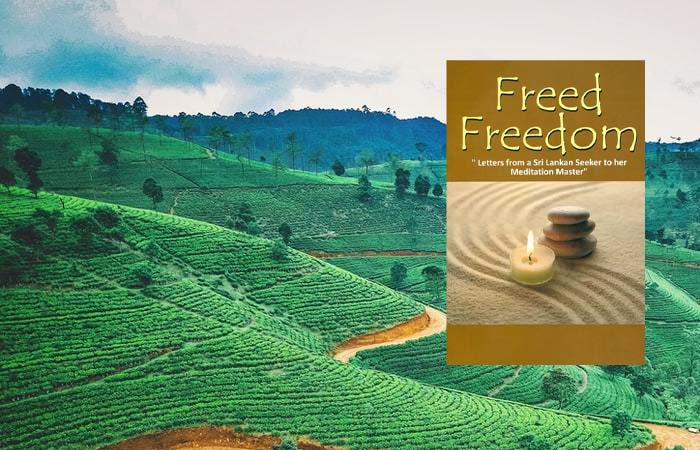
Featured image for “Freed Freedom”

Freed Freedom: Letters from a Sri Lanka Seeker to her Meditation Master

By Amy Edelstein
Browse All

Essays

Featured image for “The Gospel of Relaxation”

The Gospel of Relaxation

By Jeff Carreira
Featured image for “Bio-Psycho-Spiritual Foundations of Self-Realization”

Bio-Psycho-Spiritual Foundations of Self-Realization

By KD Meyers
Featured image for “Awakening Through the Body”

Awakening Through the Body

By Adriana Colotti Comel
Featured image for “What is Love? An Introspection”

What is Love? An Introspection

By Judith Marsden

Featured image for “Traditions are meant to be updated”

Traditions are meant to be updated

By Olivia Wu
Browse All

Book Excerpts

Featured image for “Divine Dragon of the Light”

Divine Dragon of the Light

By Member of The Mystery School
Featured image for “Higher Dimensional Beings”

Higher Dimensional Beings

By Jeff Carreira
Featured image for “My Journey to Inherent Freedom”

My Journey to Inherent Freedom

By Annelou Perrenoud
Featured image for “My Journey to Abiding Presence”

My Journey to Abiding Presence

By Marilyn Goswell
Featured image for “The Path of Spiritual Breakthrough”

The Path of Spiritual Breakthrough

By Jeff Carreira
Browse All

Featured Artists

Featured image for “Stella Criscuolo”

Stella Criscuolo

Featured image for “Shelli Renée Joye”

Shelli Renée Joye

Featured image for “Josephine Winsor”

Josephine Winsor

Featured image for “Leslie Raznick”

Leslie Raznick

Featured image for “Chris Lander”

Chris Lander

Browse All
Image

Books

  • All
  • Emergence Education Press
  • Transdimensional Fiction
  • Mystery School Press

Discover

  • Books
  • Programs
  • The Artist of Possibility
  • The Mystery School
  • Wisdom Cards
  • One on One Sessions

Magazine

  • Artwork
  • Book Excerpts
  • Book Reviews
  • Essays
  • Featured Artists
  • Interviews
  • Writing

About

  • About Emergence Education
  • Contact

Newsletter

Join our mailing list

Connect

  • Log In
  • Books
  • Programs
  • Wisdom Cards
  • The Artist of PossibilityMagazine
  • Luminaries
  • One-on-One Sessions
  • Blog

Join Our Mailing List